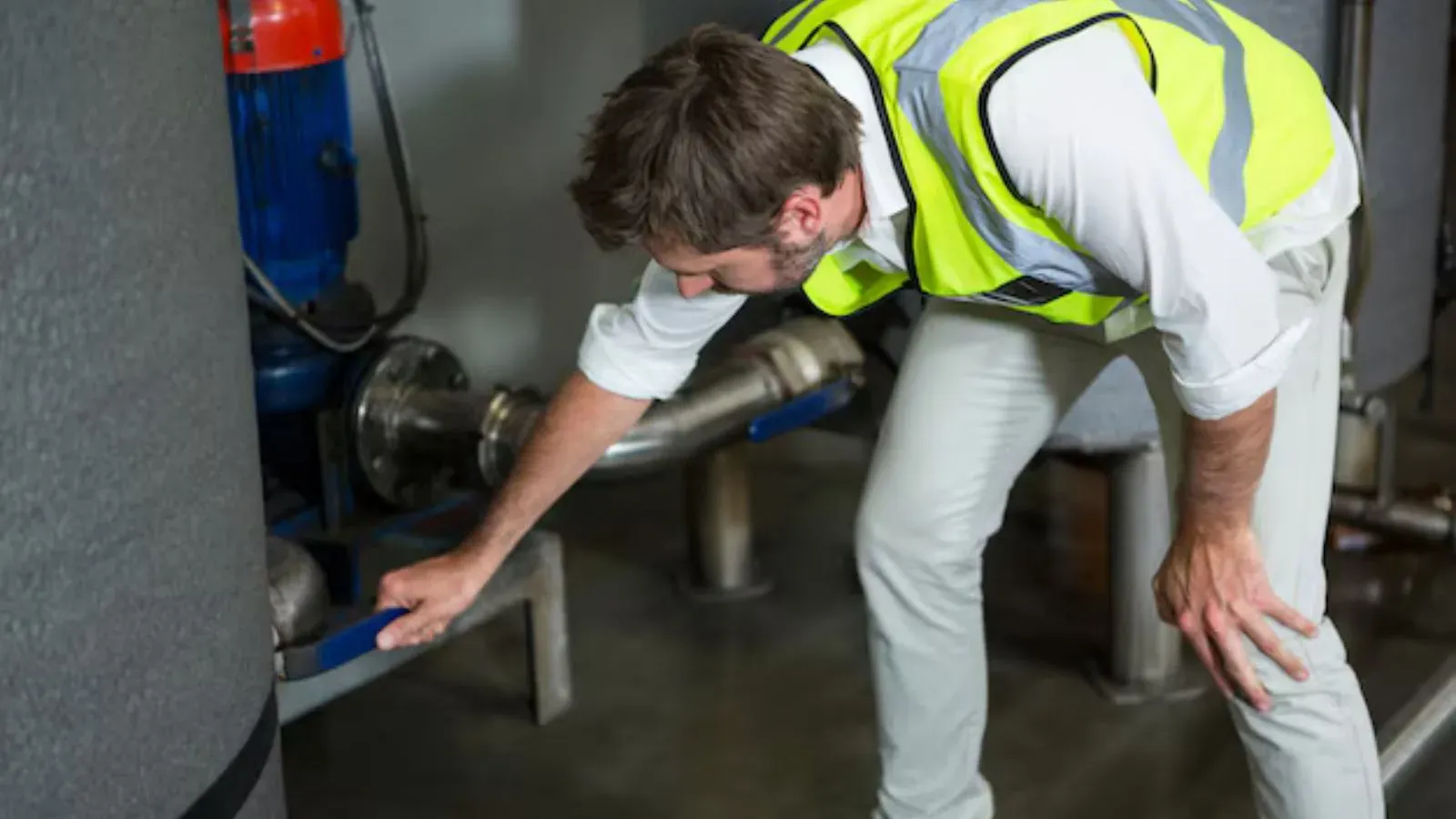
Leak detection in Englewood, NJ means finding where hidden water is escaping from a pipe, using testing and listening instead of guessing and cutting. If water is spraying or coming through a ceiling, close the main shutoff valve at once and call our 24/7 line. A slow leak behind a wall can usually wait for a same-day appointment when available.
Most leaks do not announce themselves. They show up as a water bill that jumped, a musty smell in a closet, paint that bubbles, or a floor that feels warm under bare feet. By the time a stain is visible, the water has often travelled along a joist or a pipe a long way from the source.
This page walks through the symptoms in the order people tend to notice them, then covers where leaks hide, from the attic to the buried line under the yard. When the fix goes beyond finding the leak, the next step is usually burst pipe repair or water service line repair.
Water you can see or hear right now
Spraying water, a ceiling that is sagging or dripping steadily, or water near an electrical panel all need the same first move. Close the main shutoff, which is usually where the water line enters the basement or utility room, near the meter. Then open the lowest faucet to drain the pipes and ease the pressure.
A sagging ceiling can drop without warning, so stay out from under it. If water is near outlets or the panel, do not touch anything electrical while standing in it, and call an electrician.
- Shut the main valve and note whether it turns fully, since a stuck valve is its own repair
- Move electronics, rugs and valuables out of the wet area
- Place a bucket under active drips and move furniture out from under a stained ceiling
- Photograph the damage for your insurer before any cleanup
- Do not drain the water heater without turning off its power or gas control first, following the manufacturer's directions
- Write down when you first noticed the problem and what you did
Meter still running with every tap off
Your water meter is the quickest leak detector in the house. Turn off every tap, the dishwasher, the washer and the icemaker, then look at the meter. A small dial or triangle that keeps turning means water is moving somewhere you cannot see. Many meters also have a low-flow indicator that spins even for a slow drip.
A toilet that leaks past its flapper is the most common culprit. Put a few drops of food coloring in the tank, wait 15 minutes without flushing, and look for color in the bowl. A worn flapper is a simple job under toilet repair. If the toilet is dry and the meter still moves, the leak is in a wall, under the floor or in the line between the meter and the house.
An unexplained spike on a water bill is worth a call even if the meter looks quiet when you check it, since some leaks run only when a pump or irrigation zone cycles. Ask your supplier for past readings, so the plumber can see whether use climbed slowly or jumped overnight.
Symptom, likely source and first move
Use this as a rough map, then confirm with testing.
| What you notice | Where the water may be | First thing to do |
|---|---|---|
| Meter moves with all fixtures off | Toilet flapper, a supply line or the buried service line | Run the dye test, then call for pressure testing |
| Hissing inside a wall | A pressurized supply line, often at a joint or fitting | Close the main if you can hear it and call |
| Warm spot on a floor | A hot water line under a slab or in a floor assembly | Close the hot water valve at the heater and call |
| Pressure dropped at every fixture | Service line leak, a partly closed valve or a failing regulator | Check that the main valve is fully open, then call |
| Brown stain spreading on a ceiling | Supply or drain line above, or a roof or duct source | Mark the stain edge in pencil and see if it grows |
| Musty smell, nothing visible | Slow leak in a wall cavity or crawlspace | Note the room and schedule testing |
| Soggy yard patch in dry weather | Service line or irrigation line | Turn off the irrigation zone, and the main if it grows |
None of these rows proves a cause on its own. Testing does.
Stained ceiling, damp wall or wet attic
Water follows gravity and framing, so the stain is rarely right under the leak. A stain below a bathroom may come from a shower pan, a supply line or a drain, and the plumber has to separate those. Pressure testing the supply, running each fixture in turn, and scanning with a moisture meter and thermal camera usually narrows it down.
Not every ceiling stain is plumbing. Roof leaks, condensation on cold ductwork and ice dams can leave the same brown ring. If it appears only after rain, start with a roofer. If it shows up on a dry day or keeps growing, the plumbing is the first suspect.
In the attic, look for damp insulation, rusty nails or a trail of staining on the joists. Stay on the walkway boards and off the drywall between joists, since your foot can go through the ceiling below.
Under the house and in the crawlspace
Many New Jersey homes have a basement, but some additions, porches and older ranch houses sit over a crawlspace. Supply and drain lines run under the floor there, where small leaks drip for months unnoticed. Signs include a musty smell, sagging insulation, soft spots in the floor and rising humidity.
Wear gloves and a mask if you look, because wet crawlspaces can hold mold, droppings and sharp debris. Stay out if the space is flooded, and never go in with standing water near wiring. A plumber can inspect with a flashlight and moisture meter and test each supply line in turn to see which one loses pressure.
Buried lines, sprinklers and the meter box
The service line runs from the meter or street connection to the house, buried below the frost line. A leak there can surface as a soggy patch, unusually green grass in dry weather or a drop in pressure. Plumbers narrow the spot with acoustic listening equipment, pipe tracing and a pressure test that isolates the line from the house.
Sprinkler systems are a common hidden leak. A broken head, a cracked valve or a stuck zone valve can run water for weeks. Turn the system off at the controller and check the meter again. If it still moves with irrigation off, the problem is back in the house or the service line.
The meter box at the curb or sidewalk can fill with water if a fitting at the meter is leaking, and the supplier usually owns the meter. If you see water in the box, call the supplier named on your bill. Who owns which section of pipe varies, so ask where their side ends and yours begins.
Pool and spa leaks are a separate job. A bucket test helps separate evaporation from a leak, and the plumbing to the equipment pad can be pressure tested, but shell and liner leaks belong to a pool contractor.
Warm floors and the slab leak question
Slab leaks get a lot of attention, but New Jersey homes more often have basements than slabs, and supply lines usually run in basement ceilings where a leak can be seen. That changes with an addition, a garage, a sunroom or a ground-level unit built on a concrete slab, and those do exist around Bergen County.
On a slab, the signs are a warm spot on the floor, the sound of running water with fixtures off and a damp patch under flooring. Confirming it takes listening equipment and pressure testing. Repair choices include rerouting the line through walls or the ceiling, or breaking the slab at the leak, and the right one depends on what the line serves and what sits above it.
What Englewood homeowners can ask the water supplier
Much of northern Bergen County drinks water from Veolia's Oradell Reservoir system, so check the supplier named on your water bill, and ask that supplier for its annual water quality report. The same call helps with a leak. The supplier can read your meter, tell you when the readings changed and say whether the meter shows constant flow. That timeline tells a plumber where to start testing.
Englewood is a long-settled city, with railroad service dating to 1859 and 11,563 housing units. Each house has to be looked at individually, but older homes can have older supply piping, mixed materials and past repairs, which are all places to test. If a leak leads to wall or floor work, permit rules vary by job, so ask the Englewood Building & Code Enforcement office.
A leak found in the wall or slab often leads to a repair, so it helps to know how burst pipe repair and water service line repair work before the plumber arrives. Homeowners in Tenafly and the rest of the area can call the same 24/7 line.
What affects the price of leak detection
Finding a leak and fixing it are separate costs, and these factors drive the first one.
A single wall is quicker than a whole house with several suspect zones.
Open basement ceilings are quick to inspect. Finished ceilings, tiled floors and tight crawlspaces take more time and care.
Pressure testing, acoustic listening, thermal imaging and tracer gas each suit different leaks, and the method affects time on site.
A long service line under pavement or landscaping is harder to trace than a short exposed one.
Opening a wall, patching drywall or digging a trench changes the total well beyond the search itself.
Sudden accidental discharge may be covered, and some policies help pay to open walls to reach a leak. Gradual leaks, wear and maintenance are usually not covered, so ask your carrier before work starts.
Call and describe what you are seeing to get a clear price before work starts.
Check a plumber before you hire
New Jersey law says plumbing work must be done by a licensed master plumber. Ask for the licence number, then confirm it with the State Board of Examiners of Master Plumbers, part of the New Jersey Division of Consumer Affairs.
Permit rules vary by job, so ask the Englewood Building & Code Enforcement office before work begins.
Leak Detection questions in Englewood
A licensed plumber starts by isolating the system and watching the meter, then pressure tests sections of pipe. Listening equipment picks up the sound of escaping water, and a moisture meter or thermal camera shows where a wall is wetter or cooler. Cutting happens last, and usually only a small access hole.
Yes. Dispatch is open 24/7. Close the main shutoff first, then call and describe where the water is and whether it is near electrical equipment.
Some suppliers offer adjustments in some cases, but policies differ. Ask the supplier named on your bill what documents they want. Keep the plumber's report and the repair invoice, since they often ask for both.
No. Filling a pool, a new irrigation season, houseguests, a long billing period or an estimated read can all raise a bill. The meter test with every fixture off is the quickest way to tell. If the meter stays still, the cause is usage and not a leak.
Leak detection tests the pressurized water supply. Drain and sewer leaks leave different clues, like slow drains, smells or soft ground, and they are checked with a camera or dye test. A sewer inspection covers the buried drain side.
Usually yes. Most sinks and toilets have a small oval or round stop valve on the supply line, turned clockwise to close. If there is no valve, or it will not turn, shut the main and leave the repair to a plumber.
Irrigation lines can be pressure tested and traced like any other buried pipe. For a pool, the plumbing to the equipment pad can be tested, but a leak in the shell or liner is work for a pool contractor.
Still not sure what you need? Call the line and describe what you see.