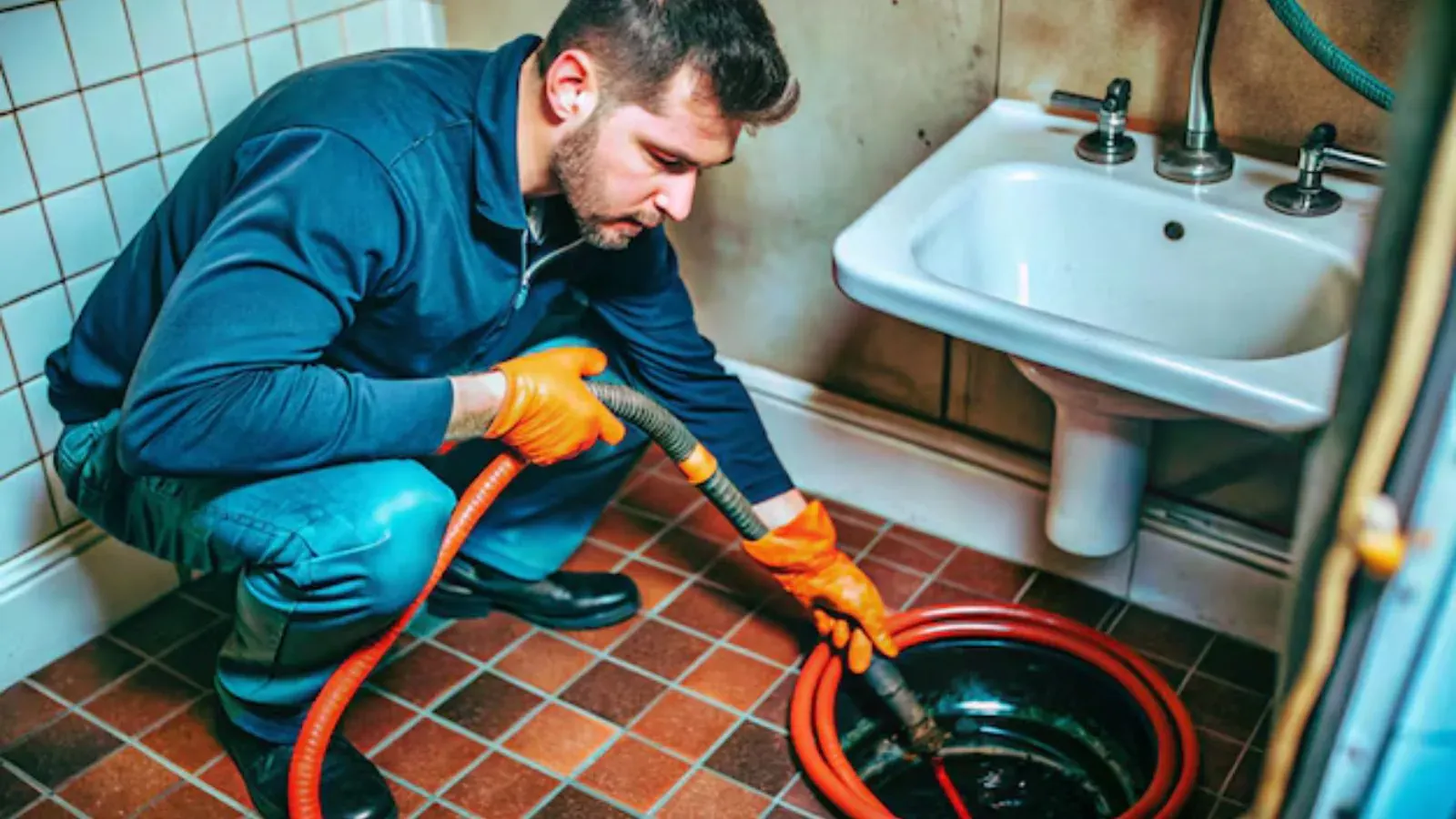
Drain cleaning in Englewood, NJ means clearing a blockage out of a sink, tub, toilet or floor drain so wastewater moves freely again. If water is already rising, stop running anything that drains, including the washer and dishwasher. Our line is open 24/7 for emergency dispatch, and we offer same-day appointments when available.
A licensed plumber starts by working out where the blockage sits. One slow tub points to that fixture's trap or branch line. Several fixtures gurgling together, or a basement floor drain bubbling when the washer empties, point to the main drain leaving the house. That single question decides the tool, the time and the cost, so it comes before anything else.
This page covers cabling a blocked line, the kitchen sink clog, shower and tub stoppages, and the quieter case where a drain runs slowly because the pipe itself is leaking. When grease or roots are the real problem, hydro jetting can do what a cable cannot, and we explain the difference below.
When a backed-up drain is an emergency
Most clogs are a nuisance. A backup becomes an emergency when wastewater is coming up through a floor drain, a toilet or a tub instead of just draining slowly. That usually means the main line is blocked, and sewage can reach a finished basement quickly once someone runs a load of laundry.
After hours, the same rule applies. If water is spreading toward outlets, a furnace or a water heater, call the 24/7 line and tell the dispatcher what you can see. A same-day or overnight visit is often justified when the backup is active.
- Stop using every sink, tub, toilet, dishwasher and washing machine.
- Keep people and pets out of the wet area, since backed-up water carries bacteria.
- Stay away from the water if outlets, a panel or appliances are in it. Turn power off only if you can reach the panel from dry ground.
- Do not pour drain cleaner into a backed-up main line. It sits in the pipe and burns whoever opens it next.
- Note which fixtures are affected and when it started, so the plumber can tell a branch clog from a main line clog.
Clues the blockage is in the main line
A single slow drain and a house-wide problem look similar at first, but a few clues separate them.
- The toilet gurgles or bubbles when the shower or washer drains.
- More than one fixture is slow at the same time, especially the lowest ones in the house.
- A basement floor drain shows standing water or a sewer smell.
- Clearing one sink makes no difference to the others.
- The problem returns within days of a store-bought fix.
- Water backs up into the tub when you flush the toilet.
Snaking and cabling: how a cable clears a clog
Drain snaking, also called cabling, feeds a flexible steel cable into the pipe while a motor spins it. The cutting head on the end bores through or snags the blockage, then the plumber pulls the debris back out. Small fixtures get a hand auger. Longer lines such as a main drain call for a drum machine with a larger cable.
Cabling works well on hair, soap scum, paper and food residue. It has limits. A cable can punch a hole through a mass of grease and leave the walls of the pipe coated, so the drain flows for a few weeks and then slows again. If that sounds familiar, ask about jetting or a camera look.
A plumber enters through the closest access point. For the main line that is usually a cleanout, a capped fitting near the foundation or in the basement. Without one, the cable goes in through a toilet or a roof vent, which takes longer and carries a small risk of damage.
The kitchen sink clog
Kitchen drains clog differently from bathroom drains. Cooking grease cools inside the P-trap and the pipe behind it, and it traps coffee grounds, rice and vegetable peelings in a layer that thickens month by month. The usual sign is a sink that drains slower each week until it stops.
Check two things before calling. If a garbage disposal sits under the sink, a jammed or humming disposal can mimic a clog, and our garbage disposal repair page covers that. If a dishwasher drains into the same line, water backing into the dishwasher tells you the blockage is past the sink.
A hand auger or a short cable usually clears a kitchen branch line. The plumber then runs hot water through it to check flow. A double-bowl sink where only one side drains often means the clog sits right at the shared tailpiece.
Which drain problem calls for which fix
This table is a starting point. The plumber confirms the cause on site before choosing a method.
| What you see | Likely cause | Usual fix |
|---|---|---|
| Kitchen sink drains slowly, then stops | Grease and food scraps in the trap or branch | Hand auger or short cable, then hot water flush |
| Shower or tub pools around your ankles | Hair and soap in the strainer, trap or pop-up | Remove stopper, cable the trap arm |
| Toilet and tub gurgle together | Partial blockage in the main drain | Drum machine cable through the cleanout |
| Floor drain or lowest fixture backs up | Full main line blockage, sometimes roots | Cable, then camera or jetting |
| Drain keeps clogging every few weeks | Grease coating, a belly in the pipe, or roots | Camera inspection, then jetting or repair |
| Slow drain plus a damp spot or odor | Leaking drain line or cracked joint | Camera and leak check, then pipe repair |
If the camera shows a collapsed or cracked section, a cable is only a temporary fix and the pipe needs repair.
Shower and tub drains, and a slow drain that is really a leak
Shower and tub drains clog with hair wrapped in soap film, usually within the first foot or two of the trap. A strainer catches most of it, and lifting the stopper often shows a wad of hair you can remove by hand. If the water still pools after that, the plumber cables through the overflow or the trap arm.
Occasionally a drain that will not run clean is not clogged at all. A cracked drain line or a failed joint lets water escape into the framing or soil, and the slow flow is only a side effect. Clues include a musty smell, a stain on the ceiling below a bathroom, or a damp patch on the basement slab. A camera inspection or a leak check separates the two, and our leak detection service handles the second case.
Old houses, big trees and drain lines in Englewood
The Erie Railroad Northern Branch began carrying passengers in Englewood in 1859, which points to a long-settled city with many older houses. Older lines can include clay or cast iron that joins less cleanly than modern pipe. Each house is different, so a camera look beats guessing when a main line keeps clogging.
With 11,563 housing units in about 4.95 square miles, the city is densely built, and tree roots anywhere on a lot can find a drain. Roots enter at joints, which is why a drain that clogs again and again after cabling deserves an inspection through our sewer inspection service. If you are not sure whether the problem sits on your side of the property line, ask the Englewood Building and Code Enforcement office, and bring what the camera showed.
If a drain keeps clogging after it is cleared, the next step is usually a camera visit, which the sewer inspection page explains. Homeowners in Teaneck and the other nearby towns can call the same 24/7 line for either one.
What affects the price of drain cleaning
Two clogs that look the same can cost very different amounts. These are the things that move the number.
A trap under a sink is a short job. A blockage deep in a main line takes longer and a larger machine.
A working cleanout speeds the job. If the cable must go through a toilet or roof vent, expect more time.
Hand augering, drum machine cabling and jetting use different equipment and different amounts of labour.
Looking inside the pipe adds time, but it shows whether the clog is a one-off or a symptom of damage.
Evening and weekend calls can cost more than a daytime appointment. You will hear the price before work starts.
Homeowners policies often cover water damage from a sudden backup only if you carry a specific sewer or drain backup endorsement. Routine clogs from hair or grease are normally treated as maintenance, so ask your carrier before you assume.
Call for a clear price on your clog, and tell us which fixtures are affected so we can send the right equipment.
Check a plumber before you hire
New Jersey law says plumbing work must be done by a licensed master plumber. Ask for the licence number, then confirm it with the State Board of Examiners of Master Plumbers, part of the New Jersey Division of Consumer Affairs.
Permit rules vary by job, so ask the Englewood Building & Code Enforcement office before work begins.
Drain Cleaning questions in Englewood
Yes. The line is open 24/7 and we offer same-day appointments when available. A backup through a floor drain, toilet or tub is treated as urgent at any hour, and the dispatcher will ask which fixtures are affected so the right cable arrives.
We advise against it. Caustic liquids can sit in a blocked pipe, damage older fittings and splash onto the next person who opens the trap. Never mix two different cleaners. If you already used one, tell the plumber so the right gloves and eye protection come out.
A cable can open a channel through grease without removing the coating on the pipe wall. The grease rebuilds and the sink slows again. Jetting can scour the line, and a camera shows whether a low spot or damaged pipe is holding water and debris.
Run water at the lowest fixture and watch the others. If a toilet gurgles when the tub drains, or a basement floor drain bubbles, the main line is involved. One slow sink with every other drain normal is almost always a local clog.
Often yes. Many tub and shower drains clear through the overflow opening or the trap arm with a small cable. Lifting the stopper or strainer first sometimes removes the hair mass by hand and saves the cabling step.
They can. Older cast iron and clay lines roughen on the inside and may have offset joints that catch paper and roots. Because each house is different, the plumber checks your line rather than assuming. A camera inspection settles the question.
Plumbing work in New Jersey must be done by a master plumber or by an authorized contractor and its employees. Ask for the licence number and confirm it with the State Board of Examiners of Master Plumbers before work starts.
Still not sure what you need? Call the line and describe what you see.