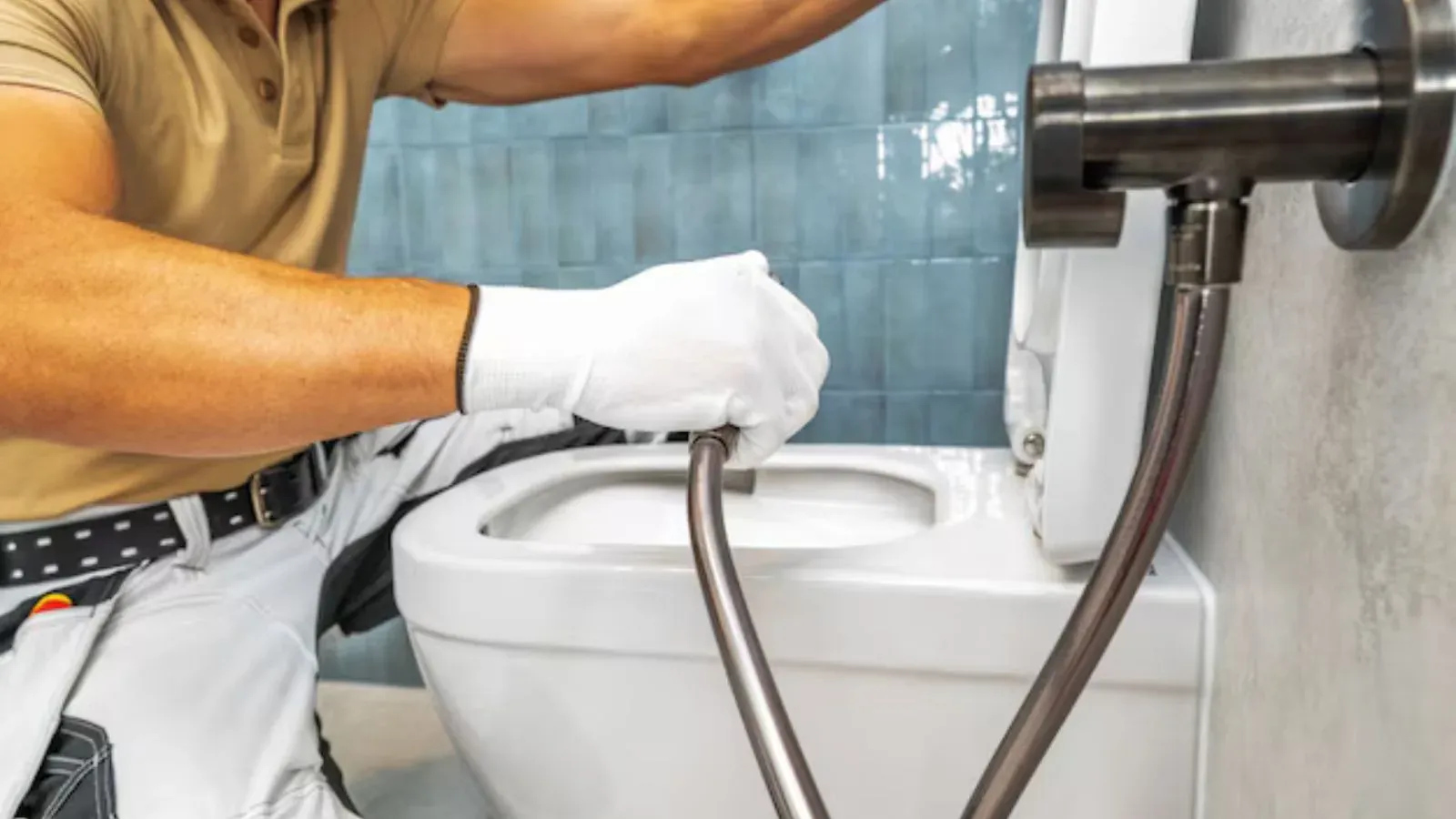
A toilet that will not stop running, rocks on the floor or spills over the rim is hard to ignore. Toilet repair in Englewood, NJ means finding the part that failed, such as the fill valve, flapper, wax ring, flange or supply line, and fixing or replacing it so the fixture seals and flushes again. Our line is open 24/7 when water is on the floor.
While you wait, shut the oval-handled supply valve on the wall behind the toilet by turning it clockwise. If the bowl is rising, lift the tank lid and press the flapper down. Lay towels around the base, keep everyone out of the bathroom, and skip further flushes until the cause is clear.
Quick checks before you call
A few minutes of looking can tell a plumber a lot over the phone and sometimes saves a visit.
- Water on the floor around the base after a flush, not before it
- A bowl that rocks or shifts when you sit down
- Tank water level sitting at or above the overflow tube
- A hissing or trickling sound minutes after the last flush
- A supply valve that is stuck, crusty or drips when turned
- Only this toilet slow, or the tub and sinks gurgling as well
Toilet symptoms, likely causes and usual fixes
Most toilet complaints trace back to a short list of parts. This table shows the common pairings.
| What you see | Likely cause | Usual fix |
|---|---|---|
| Tank refills every few minutes with no flush | Worn flapper letting water seep into the bowl | Replace the flapper and check the seat |
| Constant hiss, water runs into the overflow tube | Fill valve not shutting off or float set too high | Adjust the float or replace the fill valve |
| Puddle at the base, bowl feels loose | Failed wax ring or damaged flange | Pull the toilet, reset on a new wax ring, repair the flange |
| Drip at the wall under the tank | Cracked supply line or leaking angle stop | New braided supply line, replace the stop if it will not seal |
| Weak flush, water swirls slowly | Partial clog or blocked rim jets | Auger the toilet, then clear the jets if needed |
| Bowl and nearby drains all back up | Blockage in the branch or main drain line | Camera check and drain clearing, not a toilet repair |
A wet floor does not always mean a bad wax ring. Condensation on a cold tank can look the same, so a plumber checks before pulling the fixture.
Leaks at the base, wax rings and flanges
A wax ring is a thick gasket that seals the toilet outlet to the closet flange, the ring bolted to the floor above the drain. When the bowl is lifted for any reason, that ring should be replaced. Reusing it is a common reason a toilet leaks again after a quick repair.
If the flange is cracked, rusted or sitting below the finished floor after new tile went in, a fresh ring cannot seal well. A licensed plumber can fit a repair ring or replace the flange, then set the bowl level with new closet bolts. Slow base leaks soak the subfloor, so a damp or soft spot near the toilet deserves attention soon.
Running toilets, fill valves and supply valves
The fill valve refills the tank after each flush, and the flapper holds that water until you flush again. Either can wear out. A simple dye test helps. Add a few drops of food coloring to the tank, wait fifteen minutes without flushing, and look at the bowl. Color in the bowl points to the flapper.
Fill valves are cheap parts, and replacing one is usually quick. The harder question is whether the rest of the tank hardware is worn too. If the flush handle, chain and flapper are all stiff and brittle, replacing the full set often makes more sense than fixing one piece at a time.
The small valve on the wall, called an angle stop or supply valve, lets you shut the toilet off without closing the whole house. Older stops can seize, weep from the stem, or fail to close all the way. Forcing a stuck one can snap it.
If your valve will not turn, stop and call before the tank line fails. A plumber may need to close the main shutoff to swap the stop and the 3/8-inch braided supply line together. Both are inexpensive parts, but doing them as a pair avoids a second leak a month later.
Clogged toilet or a drain line problem?
One toilet that clogs once is usually a toilet problem. A plunger with a flange cup often clears it. Do not pour drain cleaner into the bowl, because the chemicals can splash back and may damage the fixture.
If the shower gurgles when you flush, or two fixtures slow down together, the blockage is probably in the branch line or main drain. That is a job for professional drain clearing, and a camera can show whether roots or a damaged section sit behind it. Repeat clogs in a single toilet can also mean a partly blocked vent or a poorly seated bowl.
When a toilet problem cannot wait
Call right away when water keeps flowing onto the floor, when sewage backs up into the bowl or tub, or when a supply line has failed and the valve will not close. Standing water can ruin a ceiling below, and sewage carries bacteria you should not touch.
If the bathroom floor is wet near an outlet or a light fixture, stay out and shut off that circuit at the panel only if you can reach it without standing in water.
- Close the supply valve behind the toilet, or the main water valve if it will not turn
- Lift the tank lid and hold the flapper down if the bowl is rising
- Move rugs and towels away, then soak up standing water to protect the floor
- Keep children, pets and hands out of sewage water
- Take photos of any damage before you start cleanup
What Englewood homes mean for toilet work
Englewood was settled long ago, and passenger rail came through in 1859, so many houses here are older. That does not tell you what is under any one bathroom floor, but it does mean each house should be checked on its own. Older cast iron or galvanized waste lines can corrode at the toilet connection, so a plumber looks at the pipe, not only the bowl.
Much of northern Bergen County drinks water from Veolia's Oradell Reservoir system, so check the supplier named on your water bill and ask for its annual water quality report. If you want to know what mineral buildup does to your tank parts, that report is the place to start. A New Jersey master plumber licence is required for plumbing work, and you can confirm one with the State Board of Examiners of Master Plumbers.
Permit rules vary by job, so ask the Englewood Building & Code Enforcement office before a full replacement or any pipe changes.
A toilet that keeps running or clogging can be a sign of a slow drain, so drain cleaning sometimes solves what looks like a toilet problem. If the bathroom also has a dripping sink, see faucet repair. The same applies in Leonia and the other nearby towns.
Choosing and installing a new toilet
Sometimes the best repair is a new toilet. A cracked bowl, a tank that leaks through the porcelain, or a model that clogs weekly is worth replacing. Measure the rough-in, the distance from the wall to the center of the floor drain. Twelve inches is common, but older bathrooms vary.
Installation covers removing the old fixture, checking the flange, setting a new wax ring, leveling, bolting down, and connecting a new supply line. Adding a toilet in a new bathroom is bigger work, since it also involves drain and vent lines, as described under new plumbing fixture installation.
What affects the price of toilet repair
Toilet jobs range from a ten-minute part swap to a floor repair, so the price depends on what the plumber finds.
A flapper or fill valve is a small repair. A flange or valve replacement takes more time and materials.
Wax ring and flange work means lifting the bowl, cleaning the flange, and resetting it, which adds labor.
A long-running leak can soften wood under the fixture and may need repair before the toilet goes back.
A replacement toilet varies by bowl shape, flush design and who supplies it.
Tight bathrooms, stuck valves and after-hours calls change how long the job takes.
Homeowners policies may cover sudden accidental water discharge, such as a supply line that bursts. Gradual leaks, wear and routine maintenance are usually not covered, so ask your carrier before filing.
Call for a clear price before work starts and same-day appointments when available.
Check a plumber before you hire
New Jersey law says plumbing work must be done by a licensed master plumber. Ask for the licence number, then confirm it with the State Board of Examiners of Master Plumbers, part of the New Jersey Division of Consumer Affairs.
Permit rules vary by job, so ask the Englewood Building & Code Enforcement office before work begins.
Toilet Repair and Installation questions in Englewood
Yes. The line is open 24/7 for overflows, failed supply lines and sewage backups. Close the supply valve behind the toilet while you wait, and tell the dispatcher whether water is still moving.
That is called ghost flushing. Water is slipping past a worn flapper into the bowl, so the fill valve tops the tank up. The food coloring test in the tank will confirm it, and the flapper is often a quick replacement.
Look for water around the base after flushing, a bowl that moves, or a musty smell. Water at the base can also be a sweating tank or a bad supply connection, so a plumber confirms the source before lifting the toilet.
Not always. Uneven flooring or loose closet bolts can cause rocking. A cracked or low flange is more likely if the toilet rocks and also leaks. Shims should not be the final answer when a seal is involved.
It is better not to. Chemical cleaners can sit in the bowl, splash on skin and damage older fixtures. Try a flange plunger first and call a plumber if a closet auger does not clear it.
Permit rules vary by job, so ask the Englewood Building & Code Enforcement office, which is open weekdays. A like-for-like swap is treated differently from moving a drain, but only the office can say for your address.
Repair is usually fine for a worn flapper, fill valve or wax ring. Replace when the porcelain is cracked, the toilet clogs constantly, or repairs keep stacking up. A plumber can compare both on a visit.
Still not sure what you need? Call the line and describe what you see.