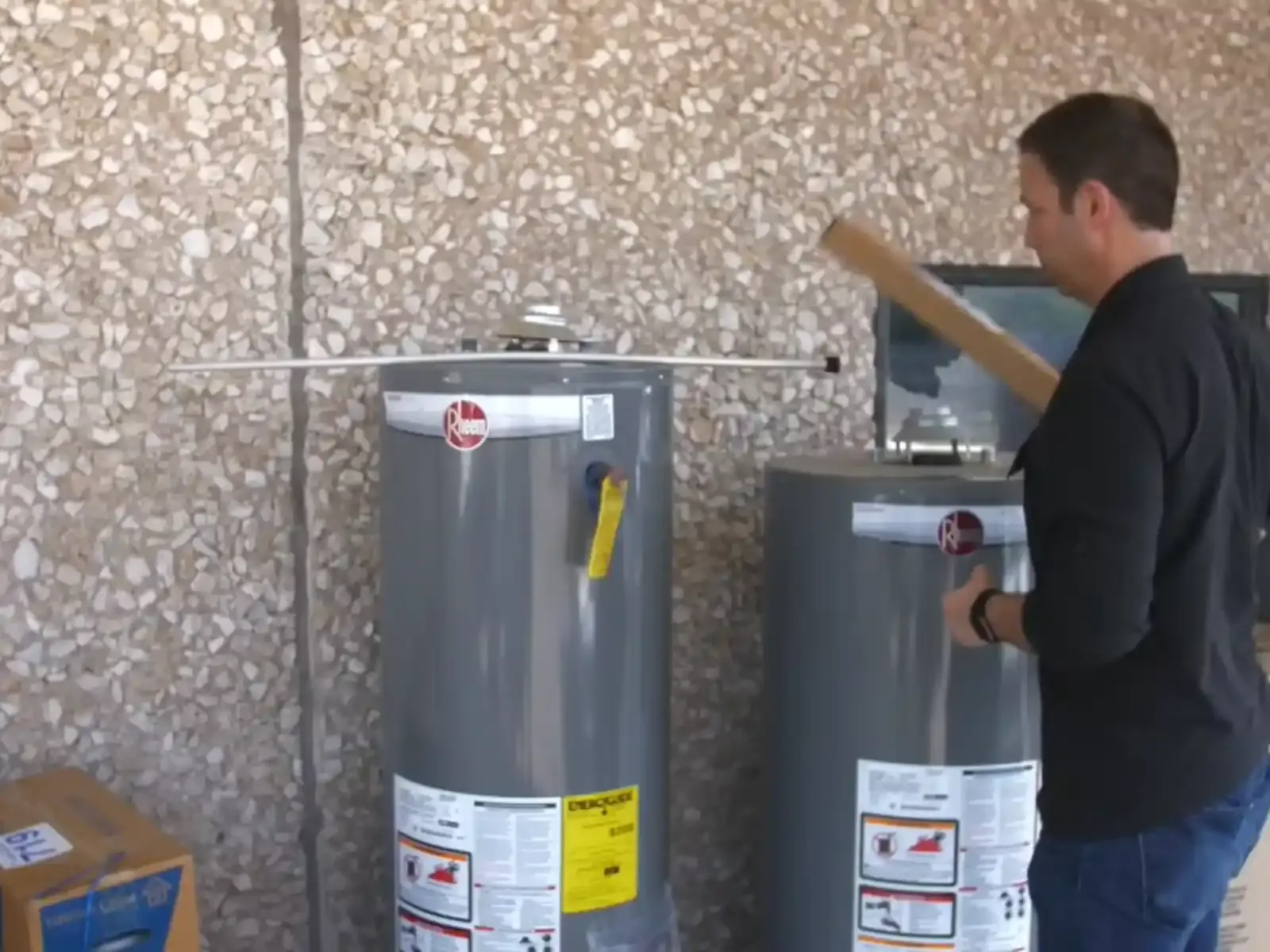
Water heater replacement in Englewood, NJ means draining and removing a failed tank, setting a new heater and reconnecting water, power or gas, and venting. If your tank is leaking now, close its cold water valve and shut off the power or gas control, then call. We take calls 24/7 for emergency dispatch and book same-day appointments when available.
Most replacements are not planned. The tank fails on a Sunday, or a plumber finds the base corroded during a repair visit, and you need hot water by evening. That is why this page leads with the decision between repair and replacement, then walks through the job itself.
If your heater is only a few years old and the problem is a part, water heater repair may be the cheaper answer. If you are choosing a new size or type with time to plan, the notes on water heater installation go deeper on sizing and venting.
Repair or replace: a decision guide
These situations come up again and again. The plumber confirms by testing before recommending anything.
| Situation | Lean toward | Why |
|---|---|---|
| Leak from the tank body or base | Replace | A corroded steel shell cannot be patched safely |
| Heater near or past 10 years with a new problem | Replace | The next failure is likely soon and repairs add up |
| Heater under 8 years, one failed element or thermostat | Repair | A small part on a sound tank is good value |
| Repeated relief valve discharge | Check first | May be pressure in the plumbing, not the heater |
| Rusty hot water at every tap | Replace, after a check | Corrosion inside the tank, though old pipes can also cause it |
| Gas heater with soot or flue damage | Replace or repair, licensed plumber only | Combustion safety comes before cost |
A second repair on the same older tank is the point where many homeowners move to replacement.
Reading the age and condition of your tank
The rating plate on the side of the heater carries a serial number that usually encodes the month and year it was made. The manufacturer's website or the plumber can decode it. Steel tank heaters often last roughly 8 to 12 years, and water quality and maintenance push the figure either way.
Condition tells you more than age. Look for rust streaks around the fittings, a damp or stained floor underneath, a tank that rumbles when it heats, and rusty-coloured hot water. A tank that has never been flushed or never had its anode rod checked may fail earlier than its age suggests.
If the anode rod, the sacrificial metal inside the tank, is nearly gone, the steel starts to corrode in earnest. Swapping the rod late in life seldom saves a tank, but earlier checks on a younger heater can.
What a same-day replacement involves
Shut off and drain
The plumber closes the water, cuts power or gas, and drains the old tank through a hose to a floor drain or outdoors.
Disconnect and remove
Water lines, the gas line or electrical connection, and the vent are disconnected, and the old tank is carried out.
Set the new heater
The new tank goes on a level base or drain pan. New flexible connectors are usual, and the relief valve discharge pipe is checked or replaced.
Reconnect and vent
Water, power or gas, and the flue are reconnected. A gas connection is leak-tested and the flue draft is checked.
Fill, test and explain
The tank is filled before power goes on so the elements do not burn out dry. The plumber checks pressure, adjusts the temperature and shows you the shutoffs.
Options: standard tank, heat pump hybrid and more
A standard storage tank, gas or electric, is the most common replacement and is the quickest swap. It uses the existing connections, and parts are easy to find.
A heat pump water heater, sometimes called a hybrid, moves heat from surrounding air into the tank. It is usually more efficient to run than a standard electric tank. It needs open air space around it, it cools and dehumidifies the room, and it needs a condensate drain, so a cramped closet may not suit one. Ask about available rebates and incentives before you decide, since programs change.
A tankless unit heats water on demand and saves floor space. It often needs a larger gas line or heavier electrical service, so it is more than a swap. Our tankless water heater page covers that route.
Tank failed at night or on a weekend: what to do until we arrive
A tank that fails after hours is stressful, but the first minutes are about limiting damage. Our 24/7 line is staffed for these calls, and we offer same-day appointments when available. Evening and weekend visits can cost more than daytime appointments, and you will hear the price before work starts.
If hot water is the only thing missing and the tank is dry outside, you can often wait for a morning appointment. If water is spreading, treat it as an emergency and keep calling until you have a plan.
- Close the cold water valve above the heater. If it will not turn, shut the main water valve.
- Switch off an electric heater at the breaker, or turn a gas control to pilot per the label.
- Never touch wet outlets or appliances standing in water.
- Use a wet vacuum or towels only if the area is dry of electrical hazards.
- Photograph the damage and the rating plate for your insurer and the plumber.
What affects the price of water heater replacement
The heater itself is only part of the price. These factors decide the rest.
Gas, electric, heat pump hybrid and tankless units differ in equipment cost and in the work needed to connect them.
A larger tank costs more and may need a bigger base or stronger venting.
Corroded shutoffs, old flexible lines or an undersized vent are replaced at the same visit.
Moving a vent, adding an expansion tank or changing fuel can add steps. Permit rules vary by job.
An after-hours emergency swap in a tight basement costs more than a scheduled daytime job.
A tank that bursts suddenly may qualify as a covered loss for the resulting water damage, but the heater itself and wear related failure usually are not. Check with your carrier and keep photos.
Call for a clear price on a replacement, and tell us the size, the fuel and the location of your current heater.
Replacing a heater in an older Bergen County house
Englewood grew from a long-settled place, with the Erie Railroad Northern Branch reaching it in 1859, and its housing includes many older homes. In some of them the old heater was set long ago, so the replacement can reveal an old vent run, a rusted shutoff or galvanized pipe. The plumber should show you each of these before replacing anything beyond the heater.
Permit rules vary by job, so ask the Englewood Building and Code Enforcement office whether your swap needs a permit. A New Jersey master plumber licence is required for plumbing work, and you can confirm the licence number with the State Board of Examiners of Master Plumbers before work begins.
If you are weighing a different type of unit, read about tankless water heaters and water heater installation to see how the process differs. Homeowners in Fort Lee and the surrounding towns can call the same 24/7 line to plan the swap.
Questions to ask before you approve the job
A clear conversation up front avoids surprises on the invoice.
- What size and fuel does the new heater use, and why that size?
- Is the expansion tank, relief valve and discharge pipe included in the price?
- Will the old vent, shutoffs and flexible connectors be replaced?
- Is there a manufacturer warranty on the heater, and who files it?
- Is any permit needed, and who pulls it?
- How will the old tank be removed?
Check a plumber before you hire
New Jersey law says plumbing work must be done by a licensed master plumber. Ask for the licence number, then confirm it with the State Board of Examiners of Master Plumbers, part of the New Jersey Division of Consumer Affairs.
Permit rules vary by job, so ask the Englewood Building & Code Enforcement office before work begins.
Water Heater Replacement questions in Englewood
Yes. The line is open 24/7 and we book same-day appointments when available. Describe the leak, the fuel and where the heater sits, and the dispatcher will tell you what to shut off while a plumber is scheduled.
A straightforward like-for-like swap often takes a few hours. Changing fuel, moving the heater, or fixing venting or old shutoffs takes longer, and the plumber will tell you which applies once the unit is inspected.
If the heater is at or past the common 8 to 12 year range, planning a replacement beats waiting for a flood. A planned swap lets you compare types and choose a daytime appointment.
It can be, if the heater sits in a room with open air, such as a basement, and a condensate drain nearby. It cools that room a little as it works. Ask about rebates, since programs change.
Permit rules vary by job, so ask the Englewood Building and Code Enforcement office at 2-10 North Van Brunt Street. They are open Monday to Friday during business hours and can tell you what applies to your swap.
The plumber drains it and carries it out. Ask in advance how the old unit is disposed of so the answer appears on your quote.
Often yes, but it is a bigger job. An electric heater needs a dedicated circuit with the right breaker, and the old gas line has to be capped safely by a licensed plumber.
Still not sure what you need? Call the line and describe what you see.