Sewer line repair in Englewood, NJ means fixing or replacing the underground pipe that carries waste from your house to the public sewer, whether by patching one section, lining it from the inside or digging out the run. If sewage is coming up in the house now, stop using water and call our 24/7 line. Keep everyone out of the wet area until a plumber has looked at it.
Most sewer failures begin small. A joint shifts, roots find the gap, and paper starts catching. A backup shows up months or years later, often after a holiday weekend or a heavy rain. By then the problem is rarely a clog alone, and snaking only buys time.
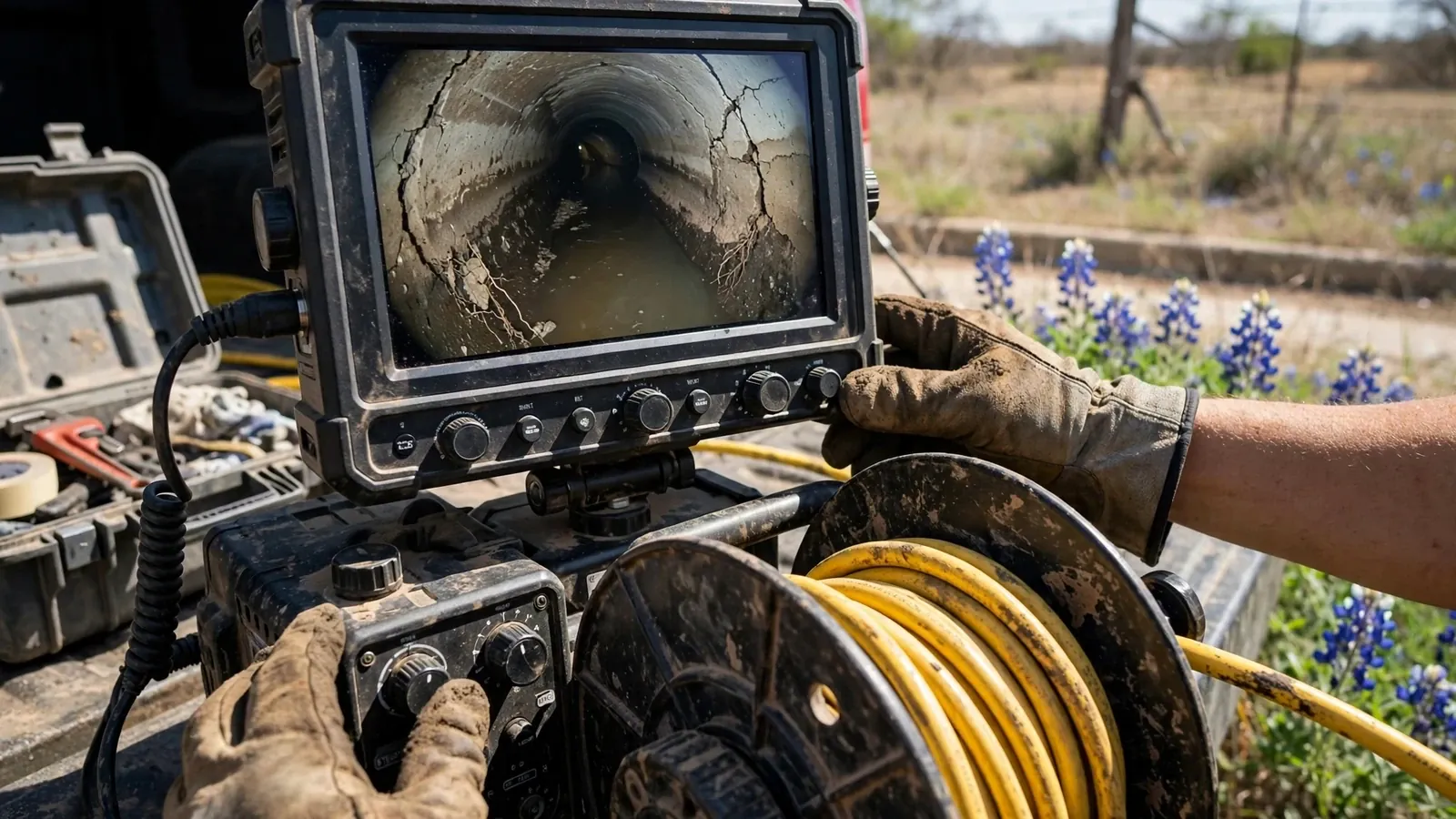
The right repair depends on what the camera shows, whether that is a single crack, a long run of root damage, a sagging low spot or a collapsed section. This page lays out the options, including no-dig pipe lining, and how to compare them.
Why sewer lines fail in older Bergen County houses
Sewer laterals installed before the mid 1900s were often clay tile in short lengths, with many joints for roots to enter. Cast iron was common nearer the house. Some mid century lines used Orangeburg, a bonded fiber pipe that softens and deforms with age. Plastic pipes such as PVC and ABS replaced all of these and have far fewer joints.
Four problems drive most repairs. Root intrusion at joints is the most common. Cracks and offsets from ground movement come next. A belly is a sag where the pipe has settled and holds water, collecting waste. The fourth is outright collapse, where a section has crushed or separated.
Roots do not break a sound pipe. They exploit joints and cracks, then expand and widen them. Cutting them out clears the line for a while, but the opening stays. Real repair means sealing or replacing that joint, or lining the pipe so no gap is left. A hydro jetting pass can clear the roots first so the repair has a clean pipe to work with.
Repair options at a glance
Each method fits a different kind of damage.
| Option | Best when | Trade-off |
|---|---|---|
| Spot (point) repair | One cracked or offset section with the rest of the pipe sound | Leaves old pipe on both sides, so other weak points may appear later |
| Pipe lining (cured in place) | Cracks or root-prone joints in a pipe that is still round and in line | Needs a pipe that has not collapsed, and the liner slightly reduces the diameter |
| Pipe bursting | Replacing a whole run by breaking the old pipe and pulling in new plastic pipe | Needs entry and exit pits, and nearby utilities must be located first |
| Open trench replacement | Collapsed, badly offset or sagging lines, or where the pipe must be re-graded | The most digging, with yard or driveway restoration |
| New cleanout installation | A line with no access point, which makes cleaning and cameras hard | Does not repair damage, but makes everything else easier |
Your camera footage decides which row fits. A sagging line, for example, usually rules lining out.
No-dig pipe lining in plain language
Trenchless repair means fixing the pipe without digging along its whole length. In pipe lining, the plumber cleans the line, then pulls or inverts a resin-soaked felt liner into place and cures it with hot water, steam or light. The resin hardens into a new pipe inside the old one, with no joints for roots to enter.
Lining needs a pipe that is still round and continuous. It cannot lift a belly or reconnect pieces that have separated. A camera look first, like the one on our sewer inspection page, shows whether your line qualifies.
Trenchless work still needs a small access point, usually a cleanout or a short dig at the foundation or street end. Yards, patios and driveways stay mostly intact, which is the main reason people choose it. Lined pipe has a smooth interior, so waste moves well, but each branch connection has to be reopened after the liner cures.
Cast iron pipe repair
Cast iron was widely used inside older houses for stacks and for the sewer run leaving the building. It rusts from the inside, forming rough scale and thin spots, and from the outside in damp soil. Warning signs are brown stains at joints, flaking pipe and slow drains that clear and return.
Repairs include replacing a failed section with plastic drain pipe joined by no-hub couplings, lining the interior, or replacing the whole run. Cutting cast iron is heavy work, and the pipe has to be supported before any section comes out. Where a house still has original iron, a camera shows how much sound metal remains.
Patch one section or replace the whole run
A spot repair makes sense when the camera shows one defect and the rest of the pipe looks clean. It means less labor and less digging. The risk is that pipe on either side is usually the same age, so another defect can show up in a year or two.
Replacing or lining the whole run makes sense when defects repeat, when roots enter at several joints, or when the line has sagged. Ask the plumber to show you the footage and point out each defect. If problems repeat along a short run, patching each one rarely beats treating the whole thing.
Ask for a second camera pass after the repair. That recording is how you confirm the new section is joined, clear and draining, and it is worth keeping for a future buyer.
Sewage in the house or yard
Sewage coming up through floor drains, a basement toilet or a shower is a health hazard. Stop all water use, because every flush or load of laundry adds to the overflow. If sewage is surfacing in the yard, keep children and pets away from the wet area.
Backups can come from your own lateral or from the public main. A plumber can often tell which by checking the cleanout. If it is dry, the blockage is probably in the house plumbing. If it is full, the blockage lies further along, either on your side of the property line or in the public sewer.
- Stop using water in the house, including laundry and the dishwasher
- Do not use chemical drain cleaners, since they sit in a blocked line and endanger whoever opens it
- Stay out of a flooded basement if the water is near outlets, the panel or appliances
- Open windows if the smell is strong, and keep children and pets out of the area
- Take photos for your insurer before cleanup, and wear gloves and boots when moving anything wet
- Find the cleanout so the plumber can start there. If the pipe proves intact, the fix may only be sewer line cleaning
What affects the price of sewer line repair
Two repairs on the same street can differ widely, and these are the reasons.
Spot repair, lining, bursting and open trench each need different labor and materials, and the gap between them can be large.
Longer and deeper runs mean more material, more digging or more liner.
A lawn is cheaper to restore than a driveway, a patio, a tree root zone or a finished basement floor.
A collapsed pipe or a line with no cleanout needs extra work before the repair can start.
Permit rules vary by job, so ask the Englewood Building & Code Enforcement office. Waiting for a permit or inspection can affect the schedule.
Sudden accidental discharge may be covered, but a sewer line that failed from age, roots or wear is usually treated as maintenance and not covered. Some policies offer a separate sewer backup or service line endorsement, so ask your carrier.
Call with the camera findings or your symptoms to get a clear price before work starts.
Englewood permits, licences and the public sewer
Englewood has been settled since the 1800s, and Erie Railroad passenger service began here in 1859. That suggests many houses have older laterals, though each one has to be checked on its own. A camera tells you whether your pipe is clay, iron or plastic, and that decides which repairs make sense.
Under New Jersey's Uniform Construction Code the city's plumbing subcode official reviews permit applications, but permit rules vary by job, so ask the Englewood Building & Code Enforcement office at 2-10 North Van Brunt Street, open weekdays 9:00 a.m. to 5:00 p.m. A New Jersey master plumber licence is required for plumbing work, so ask for the licence number and confirm it with the State Board of Examiners of Master Plumbers.
Septic is a short topic here. Most neighbourhoods in the area are on public sewer, and your property record or the Building & Code Enforcement office can confirm yours. A septic tank and drain field is a different system with different repairs, so tell the plumber on the call if you think you have one.
Before any repair, a camera visit confirms the damage, which the sewer inspection page describes. After a repair, regular hydro jetting or cleaning can keep the line clear. Homeowners in Fort Lee and nearby can call the 24/7 line to start.
Check a plumber before you hire
New Jersey law says plumbing work must be done by a licensed master plumber. Ask for the licence number, then confirm it with the State Board of Examiners of Master Plumbers, part of the New Jersey Division of Consumer Affairs.
Permit rules vary by job, so ask the Englewood Building & Code Enforcement office before work begins.
Sewer Line Repair questions in Englewood
It depends on the method. A spot repair or a lining job is often a single day's work once the line is cleaned and inspected, while a full replacement can span several days. The plumber can give a realistic window after seeing the footage.
Yes. Dispatch is open 24/7. If sewage is backing up, stop using water and call, and a licensed plumber will tell you what to do while help is on the way.
A sealed joint or a lined pipe closes the gap roots use, so regrowth at that spot stops. Old pipe elsewhere along the run can still have open joints. That is why the footage matters, and why a second camera pass after the work is worth asking for.
Not always. Lining and pipe bursting need only small entry points, while a spot repair needs one excavation at the damage. Open trench replacement is for collapsed or badly sagging pipe, and the plumber should explain why before choosing it.
The cleanout is the first clue. A camera run then shows whether the damage is in your lateral. If the camera finds the blockage past the property line, the public sewer is involved and the town or sewer authority has to be contacted.
You should expect to. A camera recording shows the exact defects, and a clear price comes before work starts. If someone recommends digging without showing footage, ask to see it.
Still not sure what you need? Call the line and describe what you see.