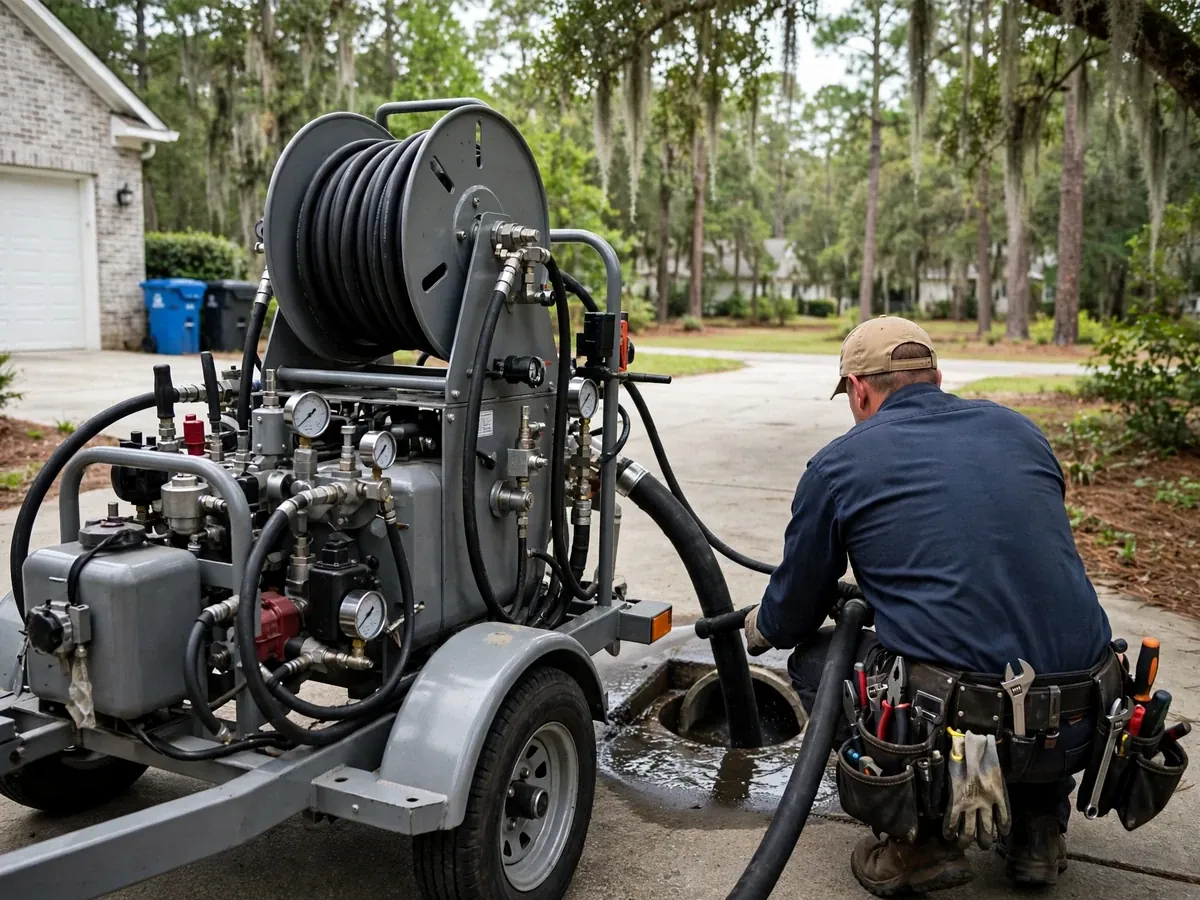
Hydro jetting in Englewood, NJ means cleaning the inside of a drain or sewer line with a high-pressure stream of water, so the pipe wall is scrubbed instead of just poked through. If sewage or gray water is coming up a floor drain or tub right now, stop running water in the house and call. Our line is open 24/7, and a licensed plumber can tell you on the phone whether this is a jetting job.
A jetter feeds a flexible hose with a special nozzle into a cleanout or drain opening. Jets on the nozzle point backward and pull the hose along, while water at pressure, often several thousand psi on residential equipment, strips grease, sludge, sand and fine roots off the pipe wall. A cable snake can punch a hole through a blockage and leave a coating of the same material on the wall. That coating is why some clogs return within weeks.
Not every pipe suits jetting. Fragile or collapsed lines can be damaged by pressure, which is why a camera look comes before the hose goes in. The sections below explain when jetting beats a cable, what moves the price, and when it should not be used. A single slow sink usually needs plain drain cleaning instead.
Water coming back up your drains right now
A backup that reaches the floor drain, shower or basement toilet is a sewage problem, not a nuisance. Raw sewage carries bacteria, so keep children and pets away and do not wade through it barefoot. Jetting is often the right fix when the line has backed up more than once, because repeated backups point to buildup that a simple snake leaves behind.
When you call, say which fixtures are affected. If every drain is slow, or the lowest ones gurgle when upstairs water runs, the blockage is probably in the main line and not in a single branch.
- Stop using sinks, tubs, washers and toilets until the line is open, since every gallon goes to the same blocked pipe
- Skip chemical drain cleaner on a backed-up line. It sits in the pipe and can burn whoever works on it next
- Stay out of a flooded basement if outlets, the panel or appliances are in the water, and call an electrician if the panel is wet
- Wear boots and gloves for cleanup, and bag soaked rugs instead of carrying them through the house
- Note when it started and which fixture backed up first, so the plumber can narrow the location
- Clear the path to the cleanout, usually a capped pipe near the foundation or in the basement
A jetter scrubs the pipe, a snake drills a hole
A cable machine, often called a snake, spins a steel cable with a cutting head. It is good at breaking through a hard stoppage such as a wad of wipes or a clump of roots. What it leaves is a channel about as wide as the cutter, with the rest of the buildup still clinging to the pipe wall.
Jetting works the full circumference of the pipe. As the hose moves forward and back, the water strips grease rings, mineral scale and sludge, then flushes the debris downstream to the public sewer. In a 4-inch house sewer, that can restore close to the full bore, which is the goal when water drains slowly but not fully stopped.
Jetting also needs a clear path for the water to leave. If the line is blocked solid downstream, the plumber opens it first, usually through the cleanout, before turning up the pressure.
Which tool fits which clog
Match what you are seeing to the likely cause and the sensible first tool.
| What you are seeing | Most likely cause | Best first tool |
|---|---|---|
| One sink slow, others fine | Hair, soap or food in a branch line | Plain cable or hand auger, no jetting needed |
| Whole house slow, gurgling at the lowest drain | Grease or scale narrowing the main line | Hydro jetting after a camera check |
| Backup returns every few months after snaking | Buildup left on the wall, or roots regrowing | Hydro jetting, then a camera to see the pipe |
| Backup after heavy rain only | Roots or a cracked joint letting soil and water in | Camera first, then jetting or repair as the footage shows |
| Restaurant or apartment kitchen line | Years of layered grease | Hydro jetting on a regular schedule |
| Cracked, collapsed or badly offset pipe | Structural failure, not buildup | Neither tool. The pipe needs repair |
A jetter clears buildup but cannot fix a broken pipe, so a collapsed section moves into sewer line repair.
Root intrusion, grease and scale, one at a time
Roots enter through joints and small cracks looking for moisture. Once inside they grow into a fibrous mat that catches paper and grease. A jetter with a cutting nozzle can clear that mat, but the roots regrow from outside the pipe unless the joint is sealed. If the camera shows an open joint, plan on a repeat visit or a repair.
Kitchen grease cools as it travels, clings to the pipe and hardens into a layer that traps more. Over time a 4-inch pipe can shrink to a narrow channel. Jetting strips these layers far better than a blade can, and a follow-up cleaning schedule keeps them from rebuilding.
Older cast iron develops rough scale on its inner wall, which snags waste and slows flow. Jetting can knock loose the soft scale, but thin, rusted iron can be fragile. That is another reason the camera goes in first.
Signs a cable alone will not hold
If more than one of these sounds familiar, snaking is probably only buying time.
- The same drain clogs again within a few months of being cleared
- The cable comes back coated with grease or tangled with root fibers
- Several fixtures slow down at once
- A basement floor drain gurgles when the washer empties
- A sewage smell near the cleanout or along the yard
- Drains slow down after heavy rain
- A plumber has told you the pipe has scale or a grease layer
What a jetting visit involves
Find the way in
The plumber locates the cleanout, or pulls a toilet if there is none, and checks which way the line runs.
Look before pressure
A camera on a flexible rod shows grease, roots, sags or breaks, so the pressure is matched to the condition of the pipe.
Jet the line
The hose goes in with the nozzle running, working past the blockage and back out in passes until the water moves freely.
Check the result
A second camera pass or a flow test confirms the line is open, and you hear about anything that needs repair.
What affects the price of hydro jetting
Jetting is priced by the job, and these are the things that move the number.
A short run from a cleanout to the street takes less time than a long lateral with several bends. Pipe diameter changes the nozzle and the technique.
Light grease may take one pass. Packed roots, scale or years of sludge take repeated passes, more water and more time.
A good exterior cleanout saves time. If the plumber has to remove a toilet to get in, the job takes longer.
Looking first adds time but keeps a fragile pipe from being jetted. It also gives you a record of what the pipe looks like.
After-hours backups are priced differently from scheduled work, and you will hear the price before work starts.
Sudden accidental discharge from a covered cause may be covered under some homeowners policies, but gradual buildup, wear and maintenance usually are not. Many policies treat sewer backup as an optional add-on, so ask your carrier before the job.
Describe your backup on the phone and you will get a clear price before work starts.
Englewood houses and what the camera tends to find
Englewood has been settled since the 1800s. The Erie Railroad's Northern Branch started passenger service here in 1859, and the city incorporated in 1899. That history suggests many houses have older laterals, though each house has to be checked on its own. Because old clay, cast iron or patched pipe may not tolerate full pressure, the camera comes first.
Homes near the Tenafly Nature Center and Lost Brook Preserve on East Hill sit close to protected woodland, so roots are a reasonable suspect when a line there keeps backing up. The plumbers serving Tenafly page explains how crews reach that borough from the Englewood office, about 3 miles away.
If jetting turns up a damaged section, permit rules vary by job, so ask the Englewood Building & Code Enforcement office before repair work starts. A New Jersey master plumber licence is required for plumbing work.
Check a plumber before you hire
New Jersey law says plumbing work must be done by a licensed master plumber. Ask for the licence number, then confirm it with the State Board of Examiners of Master Plumbers, part of the New Jersey Division of Consumer Affairs.
Permit rules vary by job, so ask the Englewood Building & Code Enforcement office before work begins.
Hydro Jetting questions in Englewood
It depends on the pipe. Sound cast iron, clay and plastic generally handle it, while cracked, collapsed or very thin pipe can be damaged by pressure. That is why a camera look comes first, and why the plumber may choose a cable or recommend repair instead.
Yes. Dispatch is open around the clock, and a licensed plumber will talk through your symptoms on the phone. If sewage is coming up, stop using water while you wait.
A line scoured of grease and scale can stay clear for years if nothing new builds up. Roots are the exception, because they regrow from outside the pipe. If the camera shows an open joint, repair or lining is what makes the result last.
No. A cutting nozzle clears roots inside the pipe, but the tree is still outside looking for water. Sealing the joint, lining the pipe or replacing the section stops the roots from coming back.
Not always, but it helps a great deal. Without one, the plumber can go in through a pulled toilet or another opening, which takes longer. Adding a cleanout is a sensible fix once the emergency is over.
Buildings with heavy kitchen grease or many units on one line often benefit from jetting on a set schedule instead of waiting for a backup. Business owners can read more on our commercial plumbing page.
Still not sure what you need? Call the line and describe what you see.