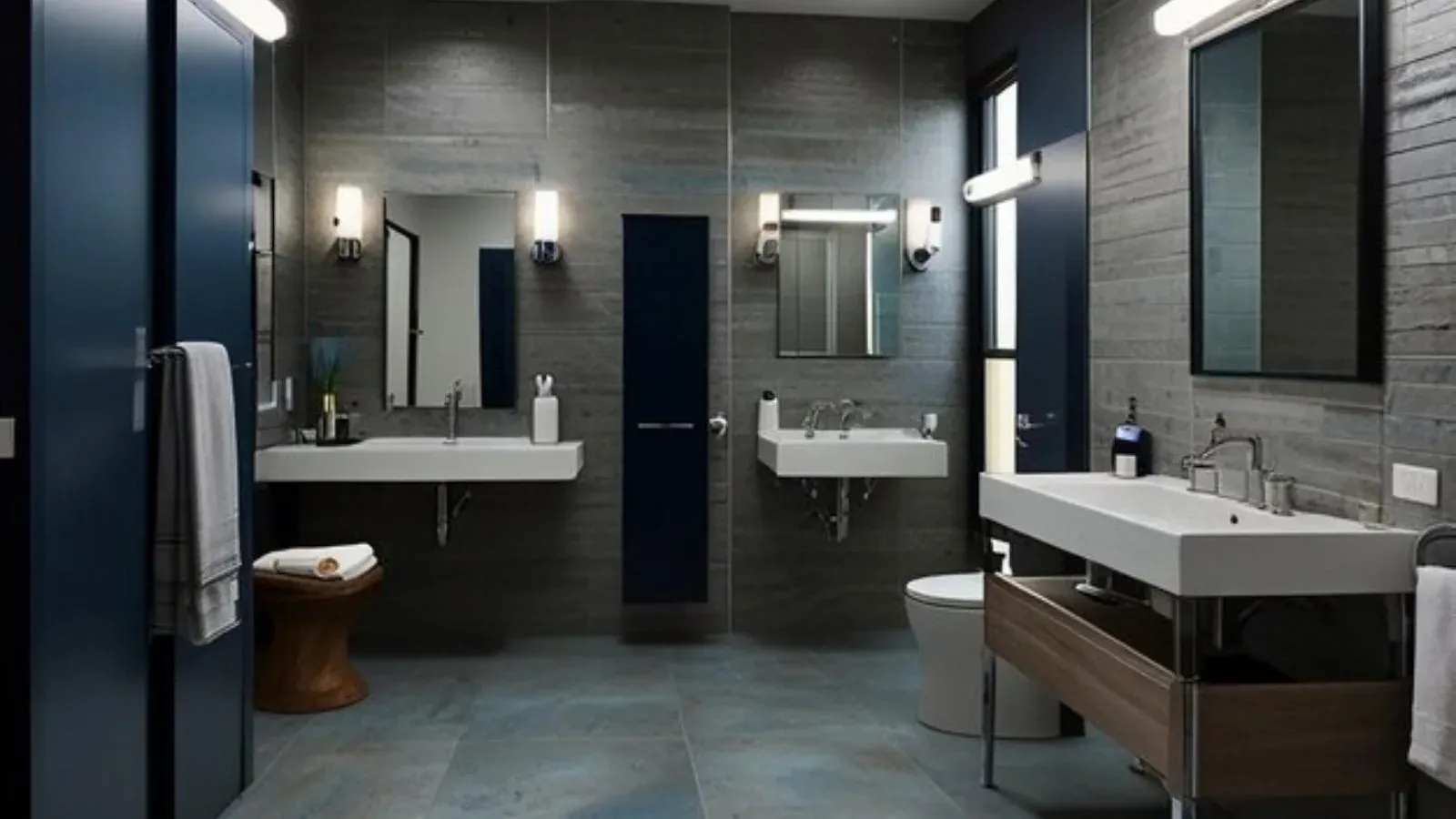
Commercial plumbing in Englewood, NJ covers repairs, maintenance and emergency calls for the plumbing in businesses and multi-unit buildings, from a restaurant kitchen to an office restroom to an apartment building riser. If water is flowing and you can reach the shutoff, close it and call our after-hours line. We talk the job through on the phone first and tell you honestly whether it fits.
Commercial systems differ from houses. Fixtures serve many people, pipes are larger, and a failure can close a business for the day. Most calls involve drains, leaks, water heaters or fixtures, but some work, such as fire sprinkler lines and large mechanical systems, belongs to specialty contractors.
This page covers common commercial calls, how they are handled and where a different contractor is the right choice. Landlords and property managers will find their questions near the end.
Restaurants, clinics and offices near Palisade Avenue and Engle Street
Palisade Avenue is Englewood's commercial centre, and Grand Avenue and Engle Street carry commercial and office space, with Englewood Hospital and Medical Center on Engle Street. That mix means restaurants with heavy grease loads, offices with shared restrooms and medical suites with sinks, sterilizing equipment and floor drains. Each needs a different plumbing approach.
A restaurant needs reliable kitchen drains, grease control and hot water at volume. An office mostly needs restrooms, break room sinks and a water heater that serves a few fixtures. Medical suites can have special drain or water requirements, so the plumber needs to know what equipment connects before quoting. Tell us what is plugged into the plumbing when you call.
Common commercial calls and who handles them
Most business plumbing falls into a few patterns, and a few belong to other trades.
| Problem | Typical cause | What happens next |
|---|---|---|
| Kitchen floor drain backing up | Grease, food solids or a blocked branch line | Cable or jet cleaning, then a trap or interceptor check |
| Restroom fixtures draining slowly | Branch or main drain blockage, often from wipes or paper products | Cable or jet from the cleanout, camera if it repeats |
| Water heater out in a small business | Failed element, burner or a worn tank | Repair or replacement, scheduled around business hours |
| Wet ceiling in a multi-tenant building | Leak from the unit above, a riser or a roof drain | Isolate the zone, then leak detection |
| Sprinkler or fire line leak | Fire protection piping | Specialty fire protection contractor, not general plumbing |
| Backflow device test due | Periodic testing for a device on the water line | Certified tester, and we will say on the call if we take it on |
The last two rows are why a job gets scoped by phone before anyone is sent.
Grease traps, interceptors and kitchen drains
A grease trap or interceptor catches fats, oils and grease before they enter the sewer. It only works when it is emptied and cleaned on a regular basis. When it is full, grease passes through and builds up in the lateral, which is how a restaurant ends up with a backed-up kitchen line.
Cleaning means pumping out the contents, scraping the walls and baffles, and checking the inlet and outlet. Larger outdoor interceptors are often serviced by a licensed waste hauler, and we will tell you on the phone if yours falls into that group. A kitchen line that still backs up after trap service often needs hydro jetting to strip the grease from the pipe.
Backflow tests, floor drains and storm drains
Backflow prevention devices keep dirty water from flowing back into the drinking supply. Many commercial buildings have them on irrigation, fire lines, boilers or kitchen equipment. Testing is done by a certified tester, and your water supplier, named on your bill, can say whether your device needs periodic testing.
A floor drain that overflows in a boiler room, a garage or a kitchen often signals a blocked branch or a main line that cannot carry the load. Do not assume the drain alone is at fault. Cleaning it and running a camera down the line shows where the real restriction sits.
Storm drain cleaning keeps parking lot and roof drains flowing before heavy rain. Leaves, grit and trash settle in the basin and the line below it. Clearing them ahead of a storm is easier than cleaning up a flooded loading dock afterward.
Commercial leak detection and where it stops
In a small shop or office, leak detection works the same way as in a house. Zones are shut off, the meter is watched, and sections are pressure tested until the source is narrowed down. A wet wall in a clinic or a climbing water bill in a row of offices can usually be traced this way.
Large buildings are different. Pressurized fire lines, multi-story risers and buried mains serving several buildings can need specialty contractors and equipment. Rather than guess, we scope the job on the phone first and say plainly if we are the right fit. If we are not, we would rather tell you than send a plumber who cannot finish the job.
Business plumbing failures after hours
A burst pipe, a sewage backup or a dead water heater does not wait for Monday. Our line is open 24/7 for business calls too, and the first step is a phone conversation about the building, the system and the symptom. Tell us whether you own the space, rent it or manage it, since that affects who can approve the work.
If the problem sits in a shared system, such as a riser or a main drain serving other tenants, contact the building manager or landlord as well. They may need to authorize work and shut water to other units.
- Locate and close the nearest shutoff valve, or the main if a pipe is spraying
- Keep customers and staff out of wet areas and away from electrical equipment
- Cover or move inventory, records and equipment before the water spreads
- Stop using restrooms and kitchen drains if sewage is backing up
- Call the landlord or property manager if you lease the space
- Photograph the damage and note the time for insurance
What affects the price of commercial plumbing work
Business jobs vary more than household ones, and these are the main drivers.
A single restroom is simpler than a multi-floor building with several risers.
Working after hours or around opening times affects scheduling and rates, and you will hear the price before work starts.
Commercial toilets, kitchen equipment and larger water heaters use different parts and take more labor than household units.
Permit rules vary by job, so ask the Englewood Building & Code Enforcement office. Commercial work can involve more steps than a house repair.
Fire lines, large mechanical systems and hauled grease waste are separate trades, billed by those contractors.
Sudden accidental discharge may be covered under a commercial property policy, while gradual leaks, wear and maintenance usually are not. Tenants and landlords may carry different policies, so ask your carrier and read your lease.
Call and describe the building and the problem to get a clear price before work starts.
Fort Lee towers and Englewood Cliffs campuses
Fort Lee has many high-rise residential buildings along the Palisade Avenue and Boulevard East corridor, from Horizon Towers, built in 1968, to the 47-floor Modern. In a tall building, a leak or a backup travels through shared risers, so the first call is usually the building manager, who controls the riser valves. For jobs a plumber can take on, the plumbers serving Fort Lee page has the coverage details.
Englewood Cliffs has corporate campuses, including LG's North American headquarters building. Buildings of that scale often have their own facilities teams and contracted mechanical trades, so tenant spaces, smaller offices and service calls are the usual fit for us. The plumbers serving Englewood Cliffs page explains how crews get there from Englewood, about 2 miles away.
Check a plumber before you hire
New Jersey law says plumbing work must be done by a licensed master plumber. Ask for the licence number, then confirm it with the State Board of Examiners of Master Plumbers, part of the New Jersey Division of Consumer Affairs.
Permit rules vary by job, so ask the Englewood Building & Code Enforcement office before work begins.
Commercial Plumbing questions in Englewood
It depends on the lease and on what failed. Shared systems such as risers and main drains are commonly the landlord's, while fixtures inside a leased space may fall to the tenant. Read the lease, and ask the plumber to note the cause in writing so you can settle it.
Yes. Dispatch is open 24/7. Close the nearest shutoff, call, and describe the building, the symptom and who can give access.
Often yes, though the job needs coordination. Shutting a riser affects every unit it serves, so the building manager usually has to notify residents. Tell us on the call which units are affected.
It depends on the size of the trap and the kitchen's volume. A widely used rule of thumb is to service it when grease and solids reach about a quarter of its depth, though the device maker's guidance and local rules come first.
Testing is done by a certified tester. Ask us on the call whether it is something we can take on or refer. Your water supplier, named on your bill, can say whether your device needs periodic testing.
Often. Same-day appointments are available when the schedule allows, and many jobs can start before opening or after closing. Tell us your busiest hours when you call.
Have the building address, the affected unit or zone, the symptom, the location of shutoff valves and a contact who can give access. If other tenants are affected, say so.
Fire sprinkler and fire pump work is usually done by contractors licensed for fire protection, so we will tell you on the call if your job falls there. We can still help with the domestic water and drain side of the building.
Still not sure what you need? Call the line and describe what you see.