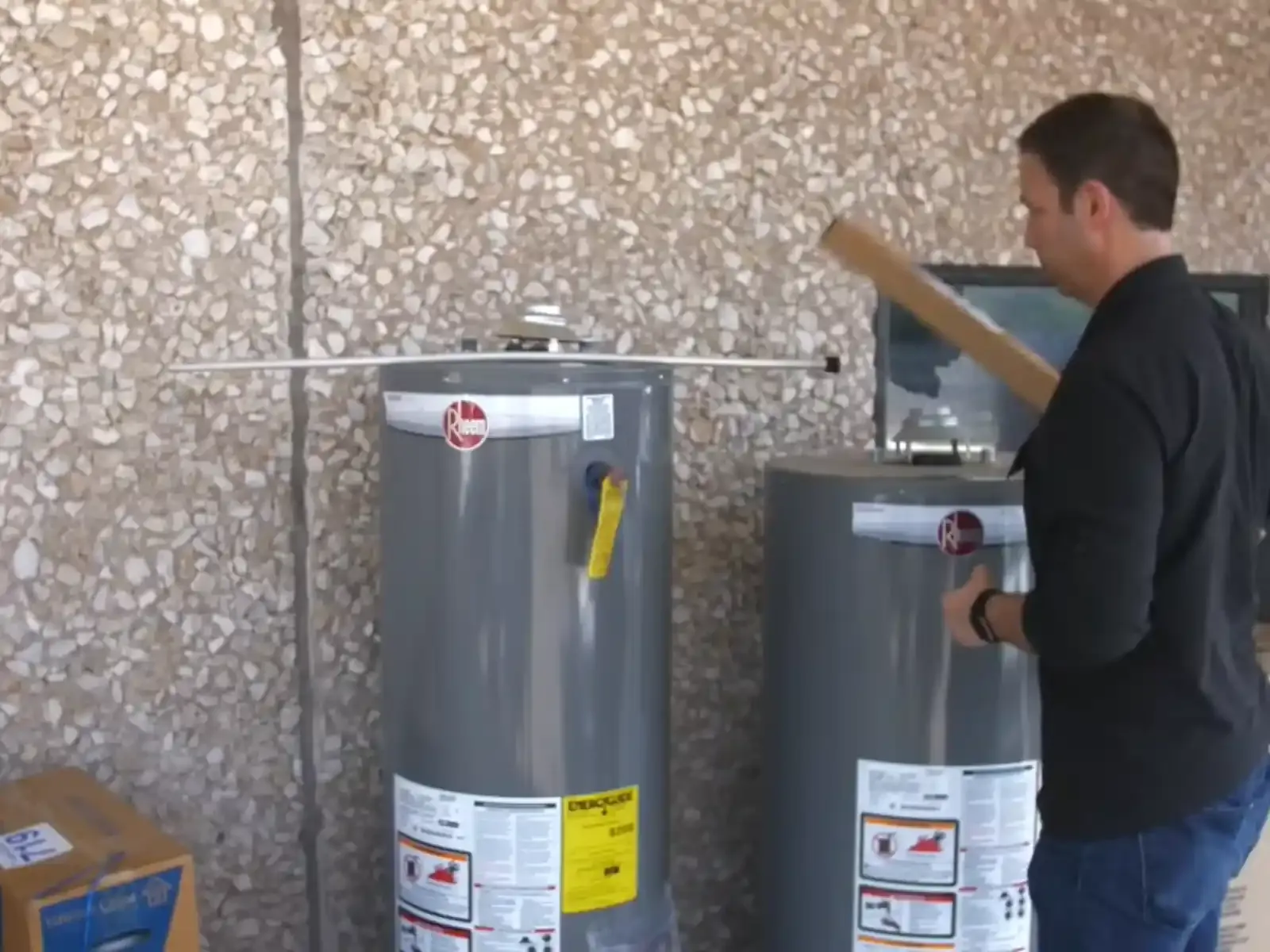
As a general industry ballpark, a heat pump water heater often costs roughly $3,500 to $8,000 installed in the Northeast. That is wider and higher than a standard tank because the unit costs more and the install may need electrical, drain, and space changes.
The final number for a home in Englewood, NJ depends on the tank size, the circuit that feeds it, where it sits, and how the condensate drains. A plumber has to see the space before giving a real figure.
General cost ballparks by scenario
These are wide, rounded industry ballparks, labelled general. They are not a quote and not a price from this company.
| Scenario | General ballpark installed | Why it lands there |
|---|---|---|
| Swap an electric tank for a heat pump unit, circuit already suitable | Roughly $3,500 to $5,500 | Mostly the unit plus a drain and a standard plumbing swap |
| Swap an electric tank, new circuit or panel work needed | Roughly $4,500 to $8,000 | Electrical work done by a licensed electrician adds cost |
| Replace a gas tank with a heat pump unit | Roughly $5,000 to $9,000 or more | Adds electrical, condensate drain, and capping the gas line |
| Tight space needing ducting or relocation | Roughly $5,500 to $10,000 or more | Air volume and a new location add labor and materials |
A standard tank often costs less up front. The question is how much you save on energy over the years, which depends on your rates.
How a heat pump water heater works
A heat pump water heater does not make heat by burning fuel or running a heating element for most of its work. It pulls heat out of the surrounding air and moves it into the water, the way a refrigerator moves heat out of its cabinet. Most models also have electric elements as a backup for heavy demand.
Because it moves heat instead of creating it, it uses less electricity than a standard electric resistance tank to heat the same water. The room around it gets cooler and a bit drier as a side effect. In a warm basement that can be a benefit in summer, and in a small closet it can be a problem.
What pushes the installed price up or down
Ask each of these questions before you compare quotes.
- Tank size, such as 50, 65, or 80 gallons, and the brand
- Whether the existing electrical circuit is suitable or a new one is needed
- Whether a condensate drain or pump is needed
- Whether the space is large enough or needs ducting
- Access, such as narrow stairs or a tight utility room
- Permit and inspection fees where they apply
- Disposal of the old tank
Space and airflow needs
A heat pump unit needs air to pull heat from. Many manufacturers call for a room volume of roughly 700 to 1,000 cubic feet or more, and some require clearance around the unit or ducting if the room is small. The installation manual for the specific model is what governs.
The unit also runs a fan and compressor, so expect noise similar to a dehumidifier. A basement works well for that reason. A closet next to a bedroom may not.
It also pumps cool, dry air into the space. In a finished basement that can chill the room, and in a utility area it may help. Think about where that air goes before you pick the spot.
The condensate drain and the electrical circuit
Heat pump units pull moisture out of the air, and that water has to go somewhere. Most need a condensate drain line that runs to a floor drain or a pump that lifts it to a drain. If the basement has no floor drain close by, a condensate pump is an added part and an added cost.
Electrical needs differ by model. Many units use a 240-volt circuit like a standard electric tank, but some use 120 volts, and the breaker size and wire gauge must match the nameplate. Any new circuit should be installed by a licensed electrician. Plumbing connections must be made by a licensed New Jersey master plumber.
If you are changing from gas to a heat pump, the old gas line and flue also need to be dealt with properly. That is another reason to bring in a licensed plumber early, through water heater installation, instead of buying a unit and hunting for someone to fit it.
Heat pump, standard electric, or gas
No option wins in every house. This table sets out the trade-offs in general terms.
| Type | Best for | Trade-off |
|---|---|---|
| Heat pump | Homes with electric hot water, a basement or large utility room, and high electric rates | Higher install cost, needs space, drain, and a bit of noise |
| Standard electric tank | Small spaces and low budgets | Highest operating cost of the three in most places |
| Gas tank | Homes with existing gas, venting, and a need for fast recovery | Needs a flue and gas supply, and combustion safety checks |
| Tankless | Homes that want endless hot water and save floor space | Higher install cost and annual descaling |
Which one wins on cost depends on what you pay for electricity and gas, so look at your own bills.
Operating cost and rebates
Heat pump units are commonly rated as using well under half the electricity of a standard electric tank for the same hot water. That is a general statement. Your savings depend on your household size, your electric rate, and where the unit sits. If you heat water with gas today, the comparison depends on the relative price of gas and electricity.
Rebates and incentives exist in some places for heat pump water heaters, from utilities, states, and federal programs. They change, have eligibility rules, and sometimes require the installer or product to meet conditions. Check current programme listings from your utility and the state before you buy, and ask the plumber whether the quote helps you qualify.
When you are replacing a failed heater, see water heater replacement for what the swap involves. A plumber can explain which option fits your house and give you a clear price before work starts. Homes in Englewood Cliffs and Teaneck get the same walk-through.
Heat pump water heaters in Englewood, Teaneck, and Englewood Cliffs
Englewood has 11,563 housing units and Englewood Cliffs has 1,961, while Teaneck is the second most populous municipality in Bergen County. Those housing stocks differ a lot, so there is no neighborhood rule for heat pump units. What matters is your own basement or utility space, its size, its floor drain, and its electrical panel.
Permit rules vary by job, so ask the Englewood Building & Code Enforcement office whether a plumbing or electrical permit applies to your swap. Under New Jersey's Uniform Construction Code the municipality has a plumbing subcode official who reviews applications. Ask the building department in your own town if you live outside Englewood.
Source type: City of Englewood Building & Code Enforcement contact page, Englewood Cliffs and Teaneck census data.
Check a plumber before you hire
New Jersey law says plumbing work must be done by a licensed master plumber. Ask for the licence number, then confirm it with the State Board of Examiners of Master Plumbers, part of the New Jersey Division of Consumer Affairs.
Permit rules vary by job, so ask the Englewood Building & Code Enforcement office before work begins.
Questions homeowners ask
It can be, if you heat water with electricity and the space suits it. The savings depend on your usage and rates, and the extra upfront cost takes time to pay back. A rebate can shorten that time.
Many models are rated for surrounding air from roughly 40 degrees Fahrenheit up, and they fall back on electric elements in colder air. Check the rated operating range for the model. A very cold basement reduces the savings.
Maybe not. Heat pump units are often taller than a standard tank because of the heat pump on top. Measure the ceiling height and clearance, and ask your plumber to check before ordering.
It needs a way to carry condensate away, either by gravity to a floor drain or with a small pump. The right setup depends on your basement.
In a multi-unit building, ask the management or board before changing a water heater, since venting, electrical capacity, and building rules may limit the choice. A closet unit may lack the air volume a heat pump needs.
Still not sure what you need? Call the line and describe what you see.
Call (551) 249-3045