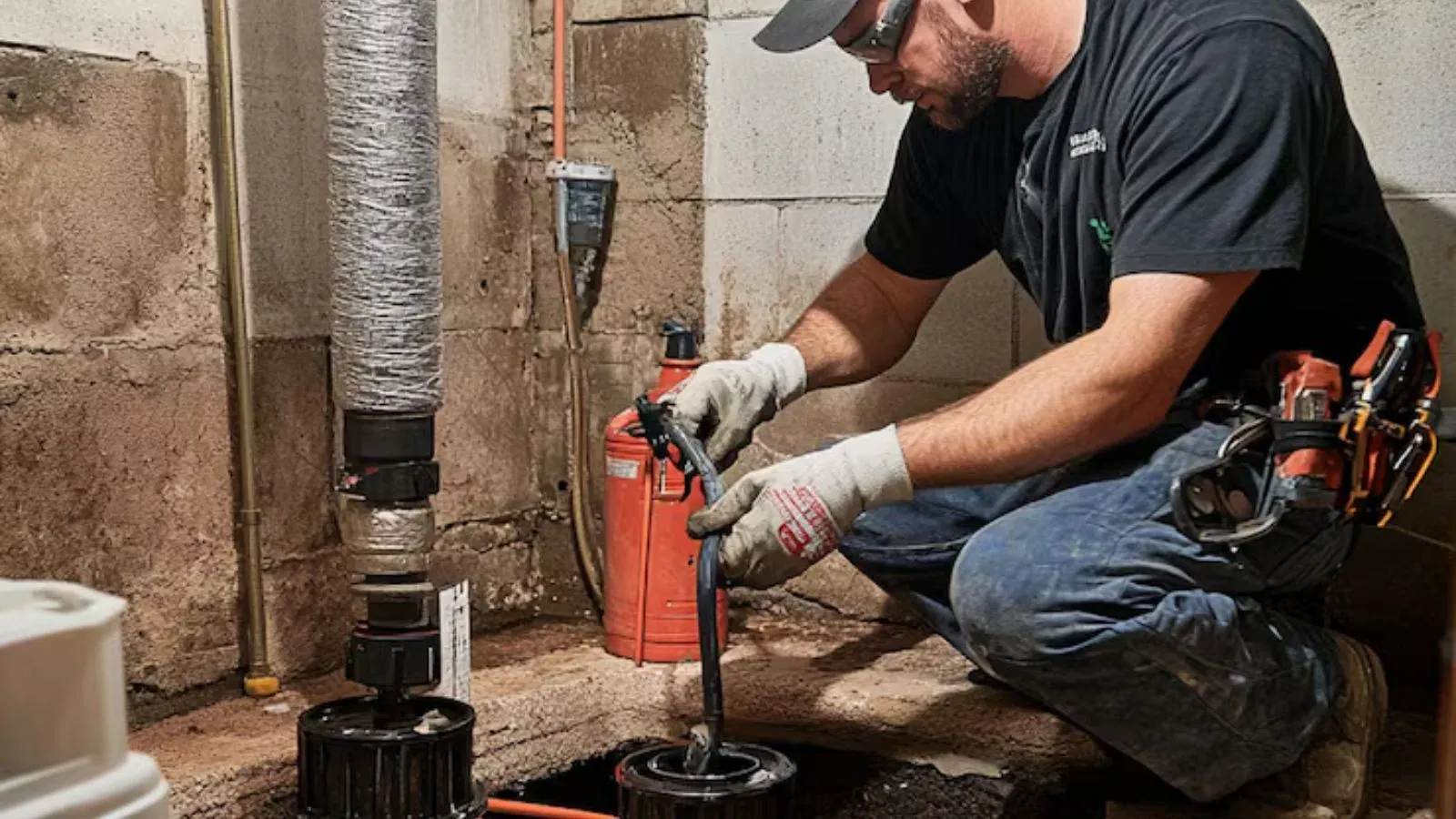
Basement waterproofing cost depends mostly on the system, the length of wall involved, and how hard the site is to work on. As a general industry ballpark, crack sealing runs from a few hundred to a couple thousand dollars, interior drain systems with a sump often run several thousand to well over ten thousand, and exterior excavation can reach into the tens of thousands.
These are wide general ranges, not quotes for Englewood, NJ. Your real number depends on what is wrong, so insist that any price follows a visit, a moisture diagnosis, and a written scope.
What actually moves the price
The first driver is the length of wall that needs treatment. A single corner with a seep is a small job. Water along the whole perimeter is a big one. Interior systems are often priced by linear foot, so the footage matters more than the square footage of the house.
The second is access. Finished basements, tight crawl spaces, and heavy furniture all add labor. If the plumber must remove flooring or drywall to reach the footing, that adds time. Slab thickness and concrete condition affect how quickly crews can cut and replace the floor edge.
Third is the water source. Groundwater rising through the slab, surface water running toward the foundation, and a failed gutter discharge all call for different fixes. A system that treats the wrong cause is wasted money.
General industry ballparks by system
These are wide, rounded ranges that appear in industry guides and vary by region and year. They are not a quote and not our price.
| System | General ballpark | Best fit | Watch for |
|---|---|---|---|
| Crack injection or patching | $500 to $2,500 | A few isolated cracks with minor seepage | Does not stop water from new cracks |
| Interior drain channel with sump | $3,000 to $12,000 | Seepage at the floor and wall joint | Depends on a working pump and power |
| Exterior excavation, membrane, and drain | $10,000 to $30,000 or more | Wall leaks and foundation damage that need access from outside | Disrupts landscaping, patios, and driveways |
| New sump pit and pump alone | $1,500 to $5,000 | Water arriving mostly from under the slab | A pump does not seal the wall |
| Grading, gutters, and downspouts | A few hundred to several thousand | Surface water near the foundation | Cheapest fix when it is the actual cause |
A job that stacks several of these, such as a drain, a pump, and exterior grading, lands near the top of each range.
Interior drain, exterior system, or sump alone
An interior drain collects water that enters at the floor and wall joint and moves it to a sump pit. It is usually less disruptive and less costly than digging outside. It manages water after it arrives instead of keeping it out.
An exterior system waterproofs the outside of the foundation wall and adds drain tile at the footing. It addresses the source directly, but it means digging along the foundation. That is hard where a house sits close to a property line, a deck, or a driveway.
A sump pump alone suits a basement where groundwater pressure rises under the slab and a pit already exists. The pump moves water. It does not repair cracks. The sump pump installation and repair page covers how that piece works.
What a good written quote should include
A trustworthy quote reads like a work order.
- The cause of the water, as the contractor found it
- Linear feet of drain or wall to be treated
- Pump model type, battery backup, and where discharge goes
- Whether floor and wall repair are included
- Permit responsibility and who pulls permits
- Warranty terms in writing, including what is excluded and who honors it
Red flags when comparing bids
Price alone is a poor way to choose. Watch for these patterns.
| Red flag | Why it matters |
|---|---|
| A full system quoted without looking at the gutters, grading, and exterior | The cheapest fix may be outside |
| Pressure to sign today for a discount | A real problem will still be there tomorrow |
| No mention of where pump discharge will go | Pumped water must go somewhere acceptable |
| A lifetime warranty with no written terms | Transferability and exclusions vary |
| Same system quoted for every house | Every foundation behaves differently |
Get at least two bids and compare scope, not only the total.
Questions worth asking before you sign
Ask who will actually do the work and whether the person holds a New Jersey master plumber licence when plumbing is involved, such as a pump and discharge line from sump pump installation. Ask for the licence number and confirm it with the State Board of Examiners of Master Plumbers.
Ask what happens during a power outage. A sump pump with no battery backup stops when the power does, and storms are when basements flood. Also ask how the pump will be tested and where the discharge line ends.
Finally, ask how the finished basement will look afterward. Some systems leave a visible channel at the floor edge. Others require patching a strip of the slab.
A basic plan before you spend
Start cheap. Clean the gutters, extend downspouts several feet from the house, and look at how the yard slopes toward the foundation. Many wet basements improve with these steps alone.
If water still comes in, have the contractor find out where. Watch where water first appears during rain, check the sump, and look at the wall for efflorescence, the white powdery trail water leaves behind.
Then match the system to the cause. The basement waterproofing service page explains how contractors typically diagnose the source before pricing.
What Englewood and Bergen County homeowners should know about waterproofing
Elevation shapes how water reaches a basement. Leonia spans from about 5 feet above sea level in its western part to about 318 feet in the east, so two basements in the same borough can face very different groundwater and runoff. Ask any contractor what they found at your address instead of accepting a general answer for the whole town.
Teaneck's western edge runs along the Hackensack River, and the township shares Overpeck County Park with its neighbors, while Englewood itself sits at about 43 feet in elevation. Ask any contractor how groundwater near low ground like that was factored into the quote. For any job that changes drainage or adds a discharge line, permit rules vary by job, so ask the Englewood Building & Code Enforcement office, or your own town's office if you live elsewhere.
Source type: municipal census and elevation data, city building dept contact page.
Check a plumber before you hire
New Jersey law says plumbing work must be done by a licensed master plumber. Ask for the licence number, then confirm it with the State Board of Examiners of Master Plumbers, part of the New Jersey Division of Consumer Affairs.
Permit rules vary by job, so ask the Englewood Building & Code Enforcement office before work begins.
Questions homeowners ask
Standard homeowners policies generally exclude groundwater seepage and gradual leaks, and a waterproofing upgrade is usually a home improvement cost. Rules vary by policy and situation, so ask your insurer and a tax professional.
They may cover different footage, different pump equipment, different repair work, or different warranties. Compare line by line. A low bid that leaves out the floor repair or the backup battery is not really lower.
Many interior drain jobs finish in a few days, depending on footage and finishes. Exterior excavation takes longer and depends on weather and soil. Ask for a schedule in writing.
It can, because groundwater pressure is often a bigger factor at lower elevations and a pump with a battery backup becomes more important. That is a reason for a site visit, not a guess. Each address needs its own diagnosis.
Masonry sealers can slow minor dampness but usually do not stop water pushing through a wall. They also can peel when moisture builds up behind them. Treat them as a temporary measure, not a system.
Still not sure what you need? Call the line and describe what you see.
Call (551) 249-3045