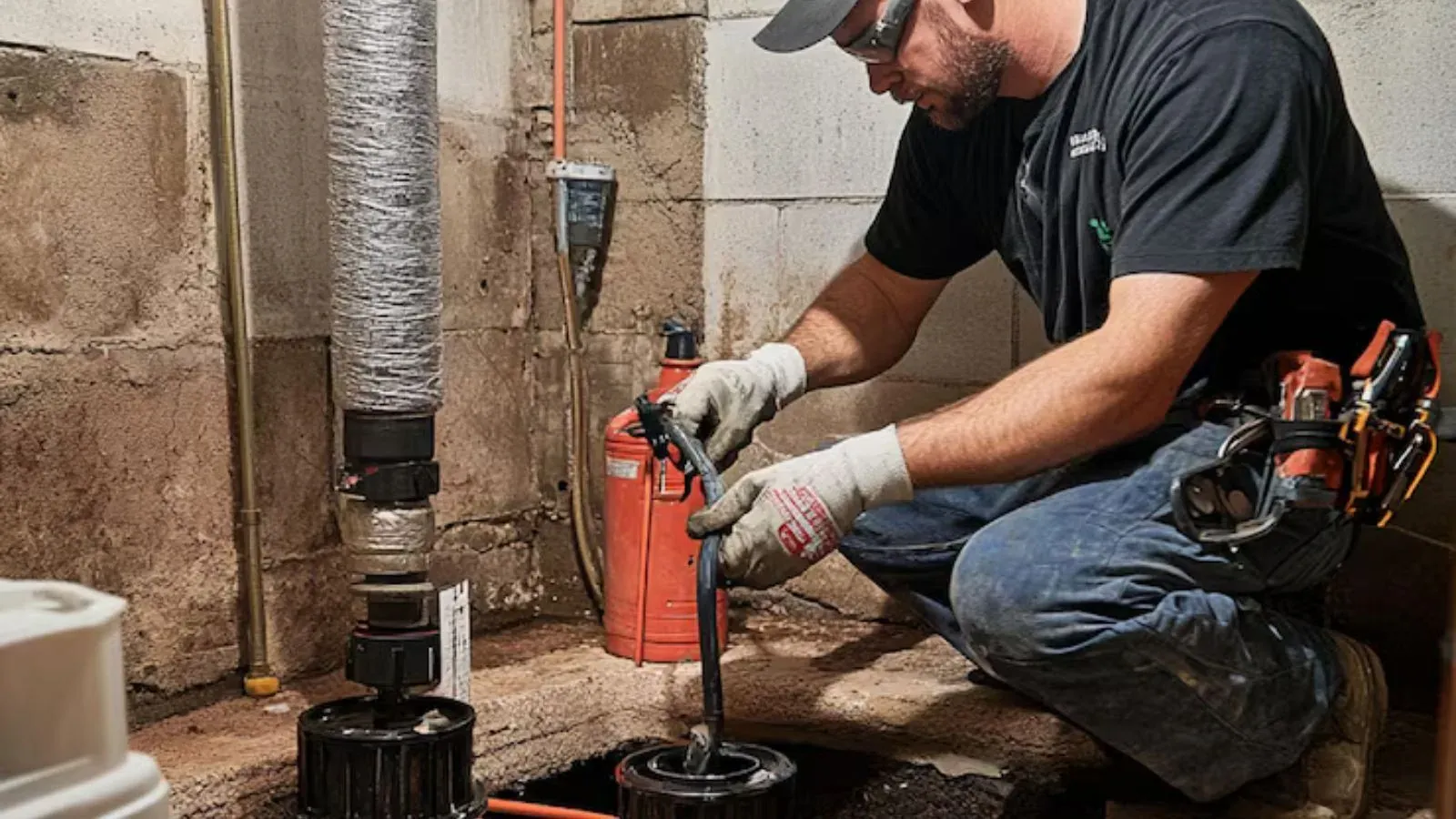
Basement waterproofing in Englewood, NJ is the work of keeping groundwater and surface runoff out of a below-grade space, using drains, pumps, grading and sealing. It is planned work, and the first job is always figuring out where the water comes from. Our line is open 24/7 if a pump or pipe fails in the middle of a project, but most waterproofing starts with a calm look at the house.
Damp basements have more than one cause, and the wrong fix wastes money. A wall that weeps after rain, a floor that sweats in August and a pipe that drips behind drywall can all look alike, yet each needs a different answer.
Where basement water really comes from
Water finds a basement through the weakest point in the foundation. Common entries are the joint where the floor slab meets the wall, hairline cracks in poured concrete, mortar joints in block walls, window wells and the opening where a pipe passes through the wall.
Behind most seepage sits hydrostatic pressure. When soil around the foundation becomes saturated, water pushes against the wall and slab with steady force and works its way through any gap. That force grows with the depth of the saturated soil and the lack of anywhere for the water to drain.
Surface water adds to it. Gutters that spill beside the house, downspouts that end at the wall and soil that slopes toward the foundation all send roof and yard water straight to the footing.
Interior drain, sump system or exterior work
Each approach has a place. The right one depends on how much water arrives and how much access you have outside.
| Approach | Best for | Trade-off |
|---|---|---|
| Interior drain tile with a sump pit | Water entering at the floor edge or through the slab | Manages water after it enters, needs a working pump and power |
| Standalone sump pump in an existing pit | Light to moderate inflow with a pit already in place | Does nothing for walls that weep away from the pit |
| Exterior excavation and membrane | Persistent wall leaks where the yard can be opened | Highest disruption and cost, can affect landscaping and patios |
| Gutters, downspouts and regrading | Seepage that follows rain from the roof or yard | Cheapest, but fixes only the water that comes from the surface |
| Crack and joint sealing | A single, stable crack in sound concrete | Can fail if the wall keeps moving or the pressure remains |
Many homes end up with a mix, such as better gutters plus a drain and pump, rather than one big system.
Start outside with gutters and grade
The cheapest work is often the most effective. Downspout extensions that carry roof water several feet from the wall, gutters cleaned before fall, and soil that slopes away from the foundation can cut the water reaching your footing considerably.
Check window wells too. A well without a cover or a drain fills like a bucket in heavy rain and pours water against the glass. We bring these ideas up before we suggest any digging inside.
How Englewood houses and slopes affect the plan
Englewood is a long-settled city with an elevation near 43 feet, and many of its houses are probably older, though each one has to be checked on its own. Older foundations of stone, block or early poured concrete can have more joints and more patched cracks, so we look at the actual wall before deciding between drains and sealing.
Slope matters nearby as well. Tenafly's East Hill rises sharply toward the Palisades, and in Leonia the ground drops from about 318 feet in the east to about 5 feet in the west. On a hillside lot, runoff travels downhill toward lower houses, so a downslope basement often needs more drainage than the same house on level ground. Our pages on Tenafly plumbing service and plumbers near Leonia cover those areas.
When the cause is a plumbing leak, not groundwater
Not every wet basement needs waterproofing. A weeping water heater, a failed washing machine hose, a leaking drain or a cracked supply line can soak a floor in the same pattern as seepage. A slab leak or a leak in the water service line can also surface in the basement.
Two quick clues help. If the dampness appears only after rain, groundwater is the likely source. If it shows up on dry days, or the water meter moves when every fixture is off, suspect a pipe. A leak detection check uses sound, moisture and camera tools to settle it before anyone breaks into a wall.
Condensation is a third cause. Cold pipes and walls collect moisture from humid summer air, which a dehumidifier handles. Tape a square of plastic wrap to the wall for a day. Moisture on the room side points to humidity, and moisture under the plastic points to seepage.
What affects the price of waterproofing work
No two basements are the same, so prices swing widely, and a clear scope matters more than a low number.
Surface fixes cost less than drains, and drains cost less than excavation.
More linear feet of drain tile or membrane means more labour and material.
Finished walls, built in cabinets or a tight yard add demolition and repair.
One pump costs less than a primary and battery backup pair.
Rotted framing, mould damage or a bad pipe discovered mid-job can change the scope.
Homeowners policies usually pay for sudden accidental water damage, such as a burst pipe, but typically exclude seepage, groundwater and gradual leaks. Waterproofing itself is a home improvement, not an insured loss, so ask your carrier about water backup coverage separately.
Call for an on-site look and a clear price before work starts.
How a waterproofing project usually runs
Find the source
We check walls, floor joints, gutters, pipes and the meter, and rule out leaks and condensation.
Agree on the scope
You get options with trade-offs, including what a licensed plumber can handle and what may need another trade.
Fix the water above ground
Gutters, downspouts and grading come first where they apply.
Install drains and pumps
Interior drain, sump pit and pump work follows, with the discharge routed away from the house.
Test under load
We run water into the pit and watch the pump, valve and discharge before closing the work.
Signs that point to a groundwater problem
These clues suggest water is coming from outside the house.
- White, powdery deposits on masonry walls, called efflorescence
- Dampness along the floor and wall joint after rain
- Rust stains at the base of steel posts
- A musty smell that is stronger after storms
- Peeling paint or bubbled wall finishes
- Water at window wells or in one corner only
Check a plumber before you hire
New Jersey law says plumbing work must be done by a licensed master plumber. Ask for the licence number, then confirm it with the State Board of Examiners of Master Plumbers, part of the New Jersey Division of Consumer Affairs.
Permit rules vary by job, so ask the Englewood Building & Code Enforcement office before work begins.
Basement Waterproofing questions in Englewood
Start outside with gutters, downspout extensions and grading, since roof water causes many problems. If the basement stays damp after those fixes, an interior drain and sump pump handle what gets through. We would rather you spend little first and see the result.
We focus on the plumbing side, including drains, sump pumps, discharge lines and ruling out leaks. Large excavation or masonry repair may involve other trades, and we will tell you plainly where that line sits on your job. Plumbing work itself requires a New Jersey master plumber licence.
Groundwater tends to appear after rain and along the walls or floor edge. A pipe leak shows up on dry days and may track a pipe run. Shutting off every fixture and watching the water meter is a simple test, and our sump pump service page explains what to do if a pit is involved.
Permit rules vary by job, so ask the Englewood Building & Code Enforcement office. They can tell you whether drain or pump work in your case needs one.
Sealing paint can slow moisture from a damp wall but will not hold back active seepage under pressure. Water behind the coating tends to blister it. It suits light dampness after the source has been controlled.
Humidity, hidden dampness or mould can all cause the smell. A dehumidifier may help, but a persistent odour deserves a look for slow leaks or wet insulation.
Still not sure what you need? Call the line and describe what you see.