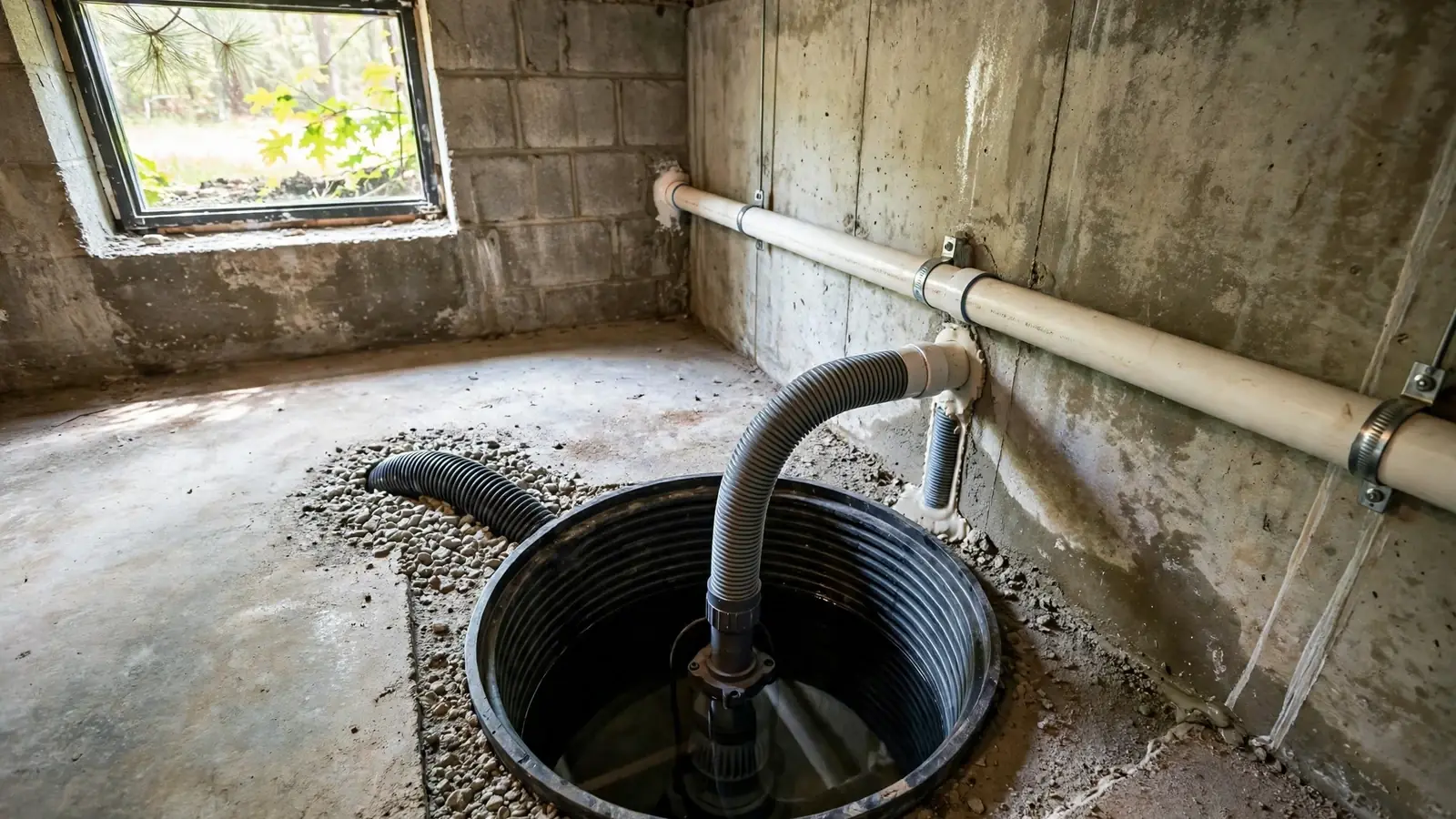
A sump pump that quits during a heavy rain gives you very little time, so our line is open 24/7 for it. Sump pump repair in Englewood, NJ means finding out why the pump in your basement pit has stopped, stalled or run nonstop, then fixing or replacing the pump, float, check valve or discharge line. While you wait, keep clear of water that could touch a plug or the panel, and carry stored boxes up off the floor.
Installation matters just as much as repair. A pit that is too shallow, a pump that is oversized, or a discharge pipe that dumps water beside the foundation can undo a good pump within a season. We size the pump to the pit and to how the water actually arrives, then set the piping so it stays out of the way of the float.
Basement bathrooms and laundry rooms below the sewer line use a different machine, called an ejector pump, and we install and repair those as well.
How a sump pump works and where it usually fails
A sump pit is a lined hole, often 18 to 24 inches wide, cut into the basement slab. Groundwater or drain tile water runs into it, a float rises with the water, and the float switch starts the pump. The pump pushes water up a discharge pipe, through a check valve and out of the house.
Most failures come from a handful of parts. The float switch can snag on the pit wall or a power cord and never lift. Silt and gravel can jam the impeller. A worn motor may hum but not spin. A cheap check valve can stick open, which lets the water in the pipe drop back into the pit and makes the pump cycle over and over.
A pump that runs constantly is not always broken. It may be losing a fight with a high water table or a clogged discharge line, so we trace the whole path before recommending a new unit.
Sump pump stopped and the pit is filling
If water is rising toward the top of the pit, you have a short window. Your goals are to keep electrical hazards away, slow the water if you safely can, and protect what is stored low. Call us at once and tell us whether the pump hums, runs or sits silent.
Never reach into a pit while the pump is plugged in, and never stand in water near live outlets. If the basement already has standing water around the panel or outlets, stay upstairs and call the electric utility or 911 if you see sparking.
- Check the breaker and the GFCI outlet the pump is plugged into, since a tripped GFCI is a common cause
- If the floor is dry and it is safe, look at whether the float moves freely without touching the pit wall
- Lift valuables, boxes and electronics off the floor and away from the lowest wall
- Take photos of any water and damaged items before you move them, for your insurance records
- Do not run washers or drain a tub if the basement drain is also slow, since that adds water
What the pump is doing and what it usually means
These are the patterns we see most often. A site visit confirms which one applies to your pit.
| What you notice | Likely cause | Usual fix |
|---|---|---|
| Pump silent, pit full | Tripped GFCI, dead motor or stuck float | Reset power, free the float or replace the pump |
| Pump hums but no water moves | Jammed impeller or clogged intake | Clean the pit and intake or replace the pump |
| Pump cycles every few seconds | Failed check valve letting water fall back | Replace the check valve |
| Pump runs nonstop | Float stuck up, or too much inflow | Reset or replace the float, review the pit and drain tile |
| Water outside near the wall | Discharge line frozen, cracked or too close to the house | Clear or reroute the discharge line |
| Gurgling and sewer odour from a pit | Open pit lid or an ejector pit venting poorly | Seal the lid and check the vent |
Because a clog or a bad valve can look like a dead pump, we test before we sell you a replacement.
Battery backup, discharge lines and check valves
Storms that fill pits are often the same storms that knock out power, which leaves a plug-in pump with nothing to run on. A battery backup pump sits beside the main pump on its own float and runs off a deep cycle battery with a charger. It buys hours, not days, and the battery needs testing and eventual replacement.
The discharge line deserves equal attention. It should carry water well away from the foundation, slope so it drains between cycles, and have a way out if one end freezes in January. Where it can be done, a short outlet above grade lets water escape if a buried section ices over.
Ask about the check valve whenever a pump is replaced. It is a small part that fails often, and a quiet, well-seated valve keeps the pump from cycling needlessly.
Ejector pumps for basement bathrooms and laundry
A basement toilet, shower or laundry sink sits lower than the main sewer line, so gravity cannot carry the waste away. An ejector pump collects it in a sealed, vented pit and lifts it, solids included, up to the house drain. It is a different machine from a sump pump and should never share a pit with groundwater.
Ejector pumps fail for the same reasons as sump pumps and for a few more. Wipes and hygiene products jam them, and a failed lid seal lets sewer gas into the room. If a basement drain is backing up as well, a drain cleaning visit may be part of the answer.
Low ground and creek country near Englewood
Ground level changes a great deal over short distances here. Neighbouring Leonia runs from about 5 feet above sea level on its west side to about 318 feet in the east, so a basement near the low edge sits much closer to the water table than one up the hill. If you live on low ground, a working pump and a backup are worth more than they would be on a slope.
In Teaneck, Overpeck County Park and the Teaneck Creek Conservancy are parks tied to creek and river corridors, and the Hackensack River runs along the township's west side. Homes near waterways can sit closer to the water table, so ask us about pit depth and pump capacity. We serve both areas, as shown on our pages for plumbers serving Leonia and Teaneck plumbing service.
What affects the price of sump pump work
A pump swap in an existing pit costs far less than a new pit, and several details decide where yours lands.
A new float switch or check valve costs much less than a new pump, so we test the pump first.
Pedestal pumps, submersible pumps and sewage ejectors differ in build and price, and the right size depends on inflow.
A cracked, silted or undersized pit may need work before any pump will last.
A long run, a buried section or a frozen line adds pipe and labour.
A battery backup adds a second pump, a battery, a charger and an alarm.
Insurance may respond to sudden and accidental water damage, but many policies exclude groundwater and sump overflow unless you added a water backup endorsement. Wear, age and lack of maintenance are usually not covered, so ask your carrier before you need it.
Call for a clear price before work starts, and we will explain each option in plain words.
Before the next big storm
A few minutes of checking in dry weather catches most problems.
- Pour a bucket of water into the pit and watch the pump start, run and shut off
- Confirm the discharge pipe ends well away from the foundation and is not buried in leaves
- Clear debris and silt from the pit floor with the pump unplugged
- Test the battery backup and look at its date label
- Plug the pump into its own GFCI outlet, not an extension cord
- Check that the check valve does not rattle or let water slap back
Check a plumber before you hire
New Jersey law says plumbing work must be done by a licensed master plumber. Ask for the licence number, then confirm it with the State Board of Examiners of Master Plumbers, part of the New Jersey Division of Consumer Affairs.
Permit rules vary by job, so ask the Englewood Building & Code Enforcement office before work begins.
Sump Pump Installation and Repair questions in Englewood
Yes. Our dispatch line runs 24/7, and a pump failing in a storm is one of the calls we expect on a wet weekend. Tell us what the pump is doing and how high the water is, and we will say what to do until a plumber arrives, subject to same-day availability when demand is high.
Many residential pumps last roughly seven to ten years, though one that runs constantly may wear out sooner. Age is a clue, not a verdict, since a failed switch or valve is cheaper to fix than a whole pump. If yours is older and the basement has flooded before, replacing it ahead of the rainy season is reasonable.
Rules on where sump water may be sent vary, and sending groundwater into a sanitary sewer is often a problem. Permit rules vary by job, so ask the Englewood Building & Code Enforcement office before you plan a discharge route. We will lay out safe options and what to ask them.
A stuck float, a bad check valve or a high water table can all keep it running in dry weather. A leaking supply line or water softener drain can also feed the pit. If you suspect a pipe, a leak detection visit can separate groundwater from plumbing water.
A sump pump moves groundwater and drain tile water out of a pit. An ejector pump lifts sewage from basement fixtures to the house drain. They have different pits, lids and piping, and one cannot stand in for the other.
If the basement is finished, holds valuables, or sits on low ground, a backup is a sensible addition. Power often fails during the same storms that fill pits. A backup runs for a limited time, so it supports the main pump but does not replace good maintenance.
Sometimes. A pump that cannot keep up after a repair may point to heavy inflow that basement waterproofing options should address. We will tell you honestly whether a better pump will do or whether the water source needs attention.
Still not sure what you need? Call the line and describe what you see.