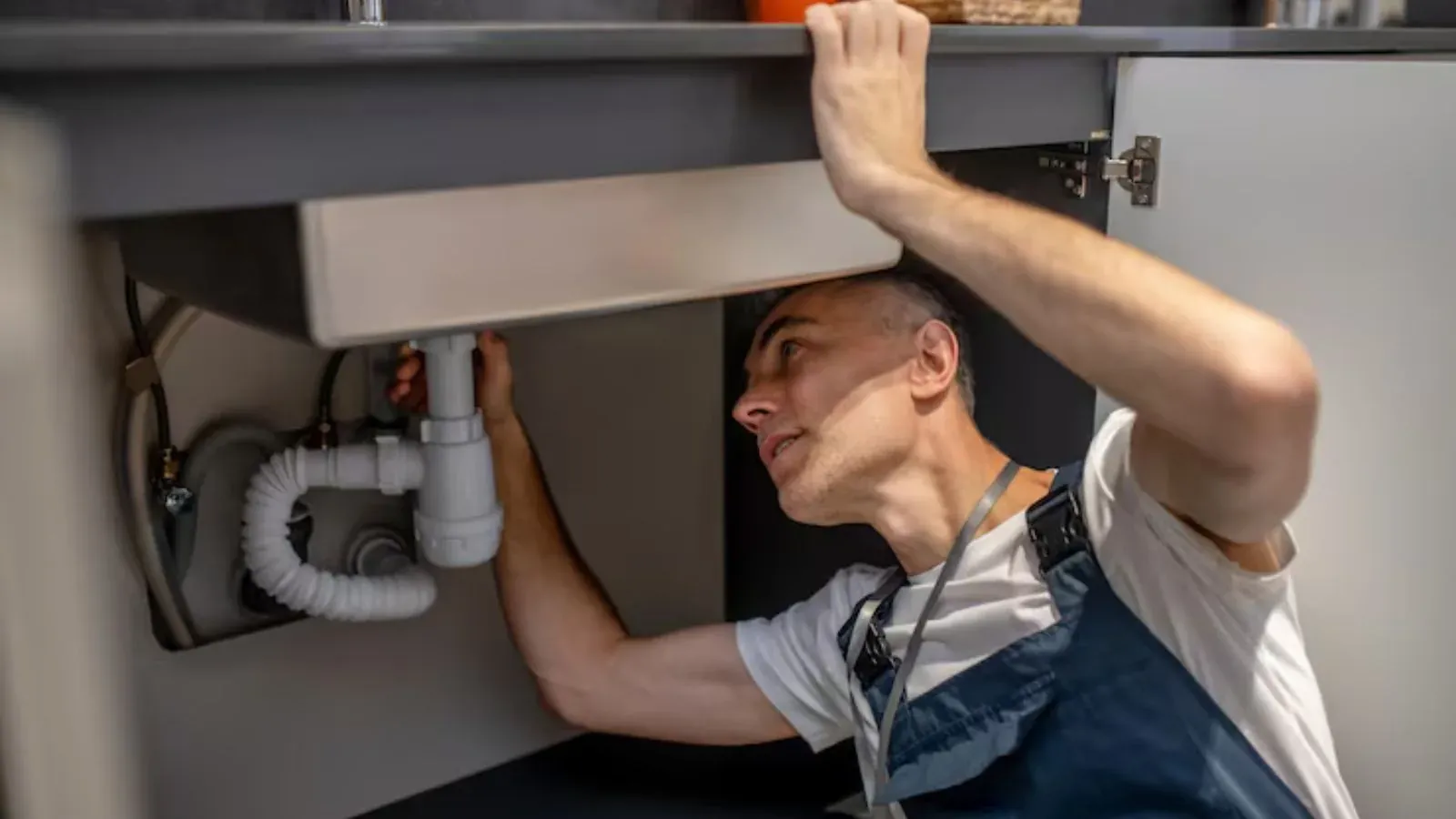
A dripping spout wastes water slowly, but a valve that will not shut off can flood a room in minutes. Faucet repair in Englewood, NJ covers fixing or replacing the faucet, its cartridge, the supply valves and the lines under the sink so the fixture runs and stops the way it should. Emergency calls are taken 24/7.
If a faucet or its shutoff valve is spraying, close the main water valve, usually near the meter or where the line enters the house. Then open a low faucet to drain the pipes and put a bucket under the leak. Keep the main closed until a plumber looks at it, and leave the fixture alone.
What happens on a faucet repair visit
Find the leak source
The plumber checks whether water comes from the spout, handle, base, supply line or the valve under the sink.
Shut off and open it up
Water is closed at the fixture stop or the main, then the handle and cartridge are removed.
Match the parts
Cartridges, seats and O-rings must fit the brand and age of the faucet, so the old parts are checked first.
Replace or repair
Worn pieces are swapped. If parts are no longer made or the body is corroded, replacement is offered.
Test under pressure
The faucet runs hot and cold, the stops are checked, and connections below are inspected for drips.
Cartridges, seats and why faucets drip
Most modern faucets use a cartridge, a sealed insert that controls flow and temperature. When it wears, you get drips from the spout or a handle that feels loose or gritty. Older compression faucets use rubber washers pressed onto a brass seat, and the seat itself can pit over time.
A leak at the base of the handle usually points to an O-ring or packing. A leak from the spout when the faucet is off points to the cartridge or seat. Matching the right part matters, because many cartridges look alike but have different splines and lengths.
Faucet problems and what usually fixes them
This chart pairs common symptoms with the repair a plumber typically makes.
| Symptom | Common cause | Typical repair |
|---|---|---|
| Drip from spout when off | Worn cartridge, washer or seat | Replace cartridge or washers, resurface or replace seat |
| Water leaks around handle | Dried O-ring or loose packing nut | New O-rings and packing |
| Low flow from one spout | Clogged aerator or debris in the cartridge | Clean the aerator, flush lines, replace cartridge |
| Showerhead leaks at the arm | Worn threads or missing tape | Reseal threads, replace the arm or head |
| Shower runs after handle is off | Worn shower valve cartridge | Replace cartridge, or the valve if corroded |
| Under-sink valve drips or will not close | Aged stop or worn stem seal | Replace the supply valve and line |
If the faucet body is pitted or the finish is peeling, a new faucet usually costs less over time than another cartridge.
Supply valves that will not shut off
Under every sink sit two small stops, one hot and one cold. They are meant to isolate the fixture, but old ones often stay open for years and then seize. Turning a stuck stop hard can crack its stem or start a drip that does not stop.
A broken or leaking supply valve usually means closing the main valve, draining the line, cutting out the old stop, and fitting a new quarter-turn valve with braided stainless lines. If the pipe behind the wall is also aged, a plumber may suggest checking for hidden leaks before closing the job.
Shower valves, tub faucets and slow drains
A showerhead that leaks at the threads often needs fresh thread tape or a new washer. A shower that drips from the head after the handle is off, or one that swings between hot and cold, points to the cartridge or mixing valve inside the wall. Plumbers usually reach it through the handle trim, but older valves may need an access panel on the other side of the wall.
Tub faucets add a diverter, the pull-up knob or lever that sends water to the shower. When water pours from the tub spout while showering, the diverter has worn out. It is a modest repair unless the spout is corroded onto the pipe.
Hair and soap build into a plug just below the strainer, and most slow drains start there. Lift out the strainer and remove what you can reach by hand with gloves. Chemical drain cleaners are a poor choice because they can sit in the tub, harm finishes and give you a hazard if a plumber must open the trap later.
If water still backs up, the blockage is deeper in the branch line, and a plumber can clear it with a cable or look at it with a camera. See drain cleaning in Englewood for the process.
When a faucet or valve leak is an emergency
Treat it as urgent when a valve cannot be shut, water sprays from a pipe or fitting, or a leak is dripping through a ceiling below. A steady drip into a basin can wait for a scheduled visit, but a running line cannot.
Never stand in water to reach the panel or touch outlets near the flood. If the room is wet and the power is on, stay out and call.
- Close the fixture stop first, then the main water valve if the stop fails
- Open a faucet at the lowest level to relieve pressure after the main is closed
- Catch spray with a bucket or towels and keep electrical items clear
- Do not force a stuck stop or valve with a wrench extension
- Take a photo of the leak and the shutoff before the plumber arrives
Local points for Englewood faucet and sink work
Englewood is a long-settled city, so some kitchens and baths likely still have older stops and supply lines, though each house must be checked individually. That is why a faucet swap sometimes turns into a valve replacement. Ask the plumber to check the stops before the old faucet comes out.
Much of northern Bergen County drinks water from Veolia's Oradell Reservoir system, so check the supplier named on your water bill and ask that supplier for its annual water quality report. Mineral buildup on aerators is worth knowing about when you decide how often to clean them. A New Jersey master plumber licence is required for plumbing work. For changes that move pipes, permit rules vary by job, so ask the Englewood Building & Code Enforcement office.
Fixtures tend to wear at similar speeds, so a leaking kitchen faucet is a good moment to ask about garbage disposal repair and toilet repair in the same visit. The same approach applies for homeowners in Leonia and the other nearby towns.
What affects the price of faucet repair
A cartridge swap and a full valve replacement are very different jobs, so cost follows the work found behind the fixture.
Fixing a cartridge takes less time than removing and installing a new faucet and supply lines.
Some cartridges are easy to find. Discontinued models can push the choice toward replacement.
A shower valve inside a wall takes more time than a sink faucet, especially if an access panel must be cut.
If the stop will not close, the plumber may need to close the main, which adds steps.
Nights, weekends and holidays can change how a visit is scheduled and priced.
A sudden pipe or valve failure that floods a room may be covered by homeowners insurance. A slow drip you ignored for months, and normal wear, usually are not, so ask your carrier.
Call for a clear price before work starts and same-day appointments when available.
Reconnecting sinks after a remodel
Plumbers are often called when a new countertop or vanity goes in and the old plumbing has to be moved. Reconnecting a sink means setting the faucet, new supply lines, the P-trap and the drain tailpiece, plus any garbage disposal or dishwasher hose. Water should run under pressure for several minutes before cabinets are closed.
Kitchen sinks with a disposal need extra care. See garbage disposal installation if you are adding or swapping one at the same time.
Check a plumber before you hire
New Jersey law says plumbing work must be done by a licensed master plumber. Ask for the licence number, then confirm it with the State Board of Examiners of Master Plumbers, part of the New Jersey Division of Consumer Affairs.
Permit rules vary by job, so ask the Englewood Building & Code Enforcement office before work begins.
Faucet and Sink Repair questions in Englewood
Yes. The line is open 24/7 for valves that will not shut off and pipe sprays. Close the main water valve while you wait and tell the dispatcher what you can see.
A cartridge, washer or O-ring repair is usually enough when the faucet body is in good shape. Replace it if the body is corroded, the finish is flaking, or parts for that model are hard to find.
A worn cartridge or valve seat inside the wall is the most common cause. The plumber removes the trim, checks the cartridge, and replaces it or the whole valve if the body is pitted.
The aerator at the tip is often clogged with mineral flakes. Unscrew it, rinse it, and try again. If the fixture is still weak, the cartridge or supply line may be partly blocked.
A damp stop can wait a short time with a pan underneath, but it can fail without notice. Put it on the list for a prompt visit, and close the main if it starts to spray.
Yes. Sprayer hoses, weights and connections are common repairs, and the plumber can often restore them without replacing the whole faucet.
Ask for the master plumber licence number and confirm it with the State Board of Examiners of Master Plumbers, part of the Division of Consumer Affairs.
Still not sure what you need? Call the line and describe what you see.