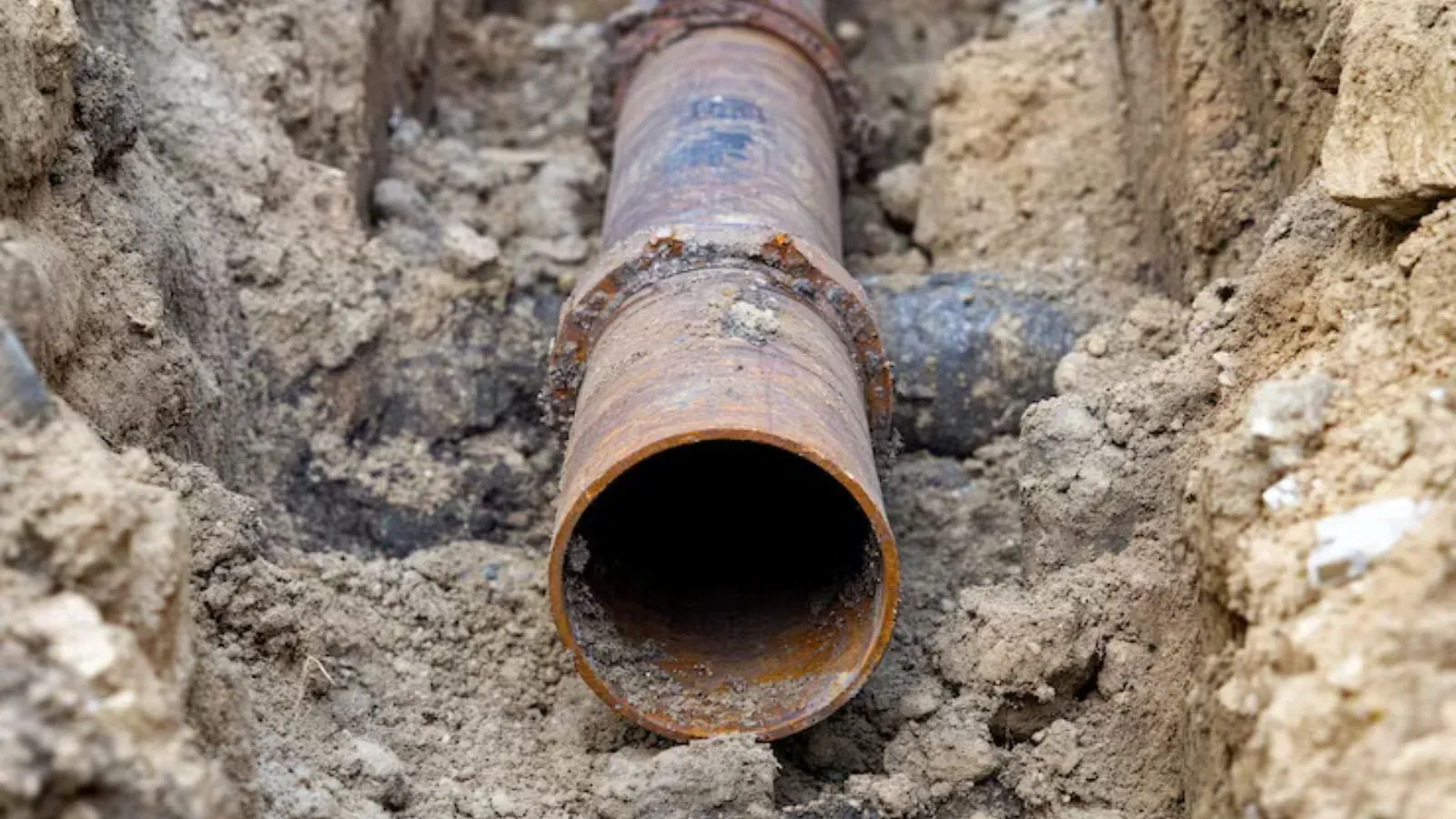
Repiping in Englewood, NJ means replacing the water supply pipes inside a house, partly or fully, with new copper or PEX. It is a planned project, not a rush call. Homeowners usually consider it after repeated leaks, rusty water, or pressure that has faded over the years.
Our line is open 24/7 if a pipe fails mid-project, and a licensed plumber can close sections of the system until the work resumes. Most repipes start with a walk-through and a look at the pipes in the basement, crawl space and behind accessible walls.
Signs your pipes are near the end
Old galvanized steel pipe rusts from the inside, so water slows as the passage narrows. Copper can develop pinhole leaks, especially at bends and joints. Polybutylene, a gray or blue flexible plastic used in some houses decades ago, has a record of failing at its fittings.
A single repair does not mean the whole house needs new pipe. A pattern does. Two or three leaks in a year, brown water after the tap sits idle, or fixtures that lose pressure when a second one opens are the usual reasons to start planning.
PEX or copper, how the two compare
Both are accepted materials for home water lines, and each suits different houses.
| Material | Best for | Trade-off |
|---|---|---|
| PEX | Houses where walls are hard to open, since it bends around corners | Not for outdoor use in sunlight, and it needs support and proper fittings |
| Copper | Exposed runs, basements, and owners who want a long track record | More labor and soldering, and it can be affected by some water chemistry |
| Mix of both | Copper at the main and visible sections, PEX in walls | Needs the right transition fittings |
| Keep existing, replace sections | Houses with sound pipe and one bad run | Weak pipe elsewhere may still fail |
Ask what fittings will be used and where they will be reachable. A good repipe plan puts joints in places you can get to.
Low water pressure and what causes it
Weak pressure has several possible causes, and old pipe is only one of them. A partly closed valve, a failing pressure-reducing valve or a clogged fixture screen can do the same. A plumber can test with a gauge on an outdoor spigot to see static pressure at the house.
If pressure is fine at the main but falls off at the fixtures, the supply pipes are the likely culprit. Galvanized steel is the classic case, since rust and scale slowly shrink the opening. In that case a repipe restores flow in a way that no valve swap will.
Whole-house repipe or phase it in
A whole-house repipe replaces nearly every supply line in one project, so you shut off water for part of a day or more. It is the cleaner option when pipes throughout are failing, or when you are already opening walls for a remodel. The job has fewer repeat visits and a single set of permits and inspections.
A phased repipe splits the work, for example a bathroom first and the kitchen later. It spreads the cost and the disruption, but it leaves old pipe in the walls until later, and some transitions between old and new pipe need careful fittings.
How a repipe project runs
Walk-through and pipe survey
The plumber maps the water main, the branch lines, fixture locations and the walls that must be opened.
Plan and written price
You get the materials, the order of work and a clear price before work starts.
Permit and scheduling
Permit rules vary by job, so the Englewood Building & Code Enforcement office confirms what applies.
Access and rough-in
Small access holes are cut, old pipe is removed or capped, and the new lines are run and supported.
Pressure test and restore water
Lines are pressure tested before walls are closed, then fixtures are reconnected and tested.
Drywall, access and cleanup
Most repipes need some drywall cut, but not as much as people fear. PEX can be fished through walls and ceilings through small openings, while copper often needs larger ones. Basements and crawl spaces cut the amount of demolition a lot.
Ask early who patches the drywall and paints. Some plumbers leave rough patches for a drywall contractor, and others coordinate a handoff. Settle that before the first cut so you are not surprised when the water is back on.
What Englewood homeowners should weigh
Englewood has been settled since the 1800s, and the Erie Railroad's Northern Branch brought passenger service in 1859. A long-settled city likely has many older houses, though each one has to be checked individually. Some may have had partial updates over time, which means a mix of old steel, copper and newer pipe inside the same walls.
Much of northern Bergen County drinks water from Veolia's Oradell Reservoir system, so check the supplier named on your water bill and ask that supplier for its annual water quality report. Water chemistry affects how pipe ages, so share that report with your plumber. A New Jersey master plumber licence is required for plumbing work. Permit rules vary by job, so ask the Englewood Building & Code Enforcement office, open weekdays at 2-10 North Van Brunt Street.
Repiping is a big job, so many homeowners first try smaller fixes such as leak detection or burst pipe repair to learn how bad the pipes are. If the plan grows into a remodel, plumbing installation covers the new fixtures. Homeowners in Teaneck can call the same line to talk it through.
What affects the price of a repipe
Repipe quotes vary widely because houses vary widely. These are the main drivers.
More bathrooms, more floors and longer runs mean more pipe, fittings and time.
PEX and copper differ in material cost and in labor, depending on the house.
Finished plaster, tile and tight chases take more time than open basement joists.
Permit steps depend on the job and are set by the municipal office.
Drywall patching, paint and flooring repairs can be in or out of the plumber's scope.
Homeowners insurance usually does not pay to replace aging pipes, since wear and maintenance are excluded. It may help with water damage from a sudden burst, so ask your carrier how a pipe failure would be treated.
Call to schedule a walk-through and get a clear price before work starts.
Questions to ask before you hire
A good repipe comes down to clear answers up front.
- What is the plumber's New Jersey master plumber licence number
- Which pipe and fittings will be used and where joints will sit
- Who pulls the permit and arranges the inspection
- How long water will be off each day
- Who patches walls and what condition they are left in
- What happens if a hidden problem turns up mid-job
Check a plumber before you hire
New Jersey law says plumbing work must be done by a licensed master plumber. Ask for the licence number, then confirm it with the State Board of Examiners of Master Plumbers, part of the New Jersey Division of Consumer Affairs.
Permit rules vary by job, so ask the Englewood Building & Code Enforcement office before work begins.
Repiping questions in Englewood
Look for repeat leaks, rusty or brown water, weak pressure at several fixtures, or visible green corrosion on copper. One leak is a repair. A pattern points to a repipe estimate.
Both are accepted for home water lines when installed correctly. PEX is flexible and faster to run, while copper has a longer history and holds up in exposed areas. The right choice depends on your walls and budget.
It depends on the house. Plumbers often restore water at the end of each work day, but some days leave certain fixtures off. Ask for the plan in writing before the work starts.
Permit rules vary by job, so ask the Englewood Building & Code Enforcement office, which is open weekdays. A New Jersey master plumber licence is required for plumbing work.
Yes. A phased repipe replaces the worst sections first. The drawback is that old pipe stays behind other walls and can still fail.
It can when corroded pipe is the cause. A plumber should first check the pressure at the main and any pressure-reducing valve. Fixing the wrong thing wastes money.
Still not sure what you need? Call the line and describe what you see.