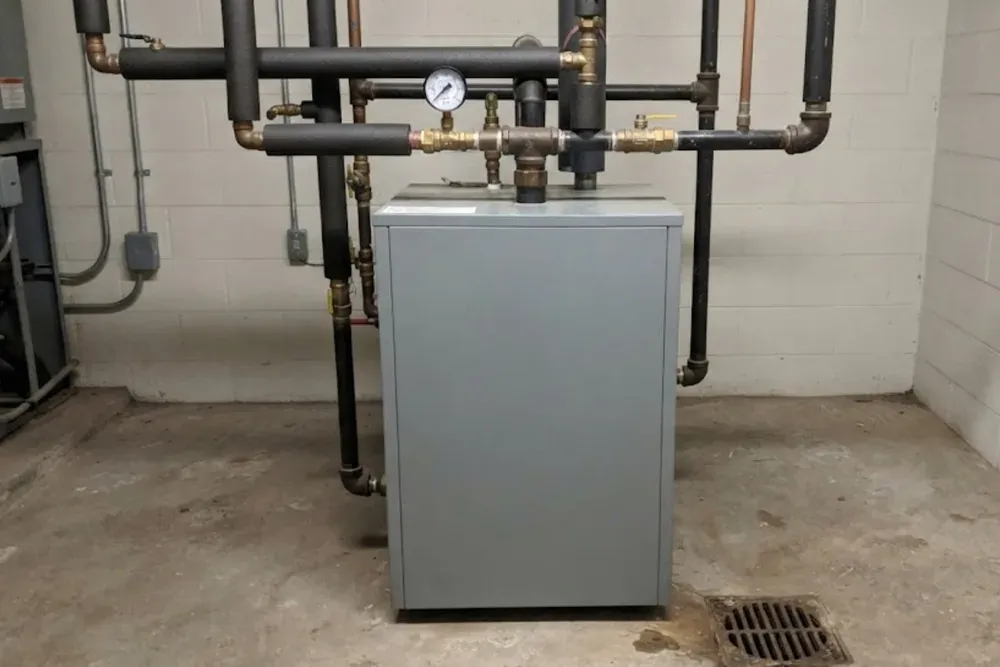
Losing heat in a New Jersey winter is urgent, which is why our line is open 24/7 for boiler trouble. Boiler repair in Englewood, NJ covers hot water and steam boilers that heat a home through radiators, baseboards or in-floor loops, plus the pumps, valves and controls around them. While you wait for us, make sure the thermostat is set to heat, keep the boiler room clear and avoid space heaters near anything that burns.
We want to be direct about scope. A New Jersey master plumber licence is required for plumbing work, and some heating and burner work is done by licensed heating contractors. We sort out what your system needs on the first call and tell you who should handle each part.
No heat, a leak or a safety scare
If a carbon monoxide alarm sounds, leave the building at once with everyone inside, then call 911. Do not stay to look for the cause and do not go back in. A gas smell works the same way: get out and call the gas utility or 911 first.
For a no heat call without any alarm, check the simple things first, then call. If the boiler is leaking steadily, switch off its power at the emergency switch and close the water supply to it, but only if you can reach both without standing in water.
- Confirm the thermostat is on heat, set above room temperature and has working batteries
- Look at the boiler for a tripped breaker, a lit display or a lockout light
- Press a reset button once only if the manual allows it, never repeatedly
- If pipes may be frozen, keep the heat on and call us before anything splits
- Keep children and pets away from hot pipes and any wet floor
- Do not remove covers, bypass safety switches or add water to a hot steam boiler
Steam and hot water boilers are different animals
A hot water boiler heats water and pushes it through pipes to radiators or baseboards with a circulator pump, then it returns to be heated again. A steam boiler boils water into steam that rises through pipes to radiators and condenses back to water. Steam systems rely on correct water level, pitched piping and working vents.
That difference shapes the repair. Hot water systems tend to show trouble through pressure, air, zone valves or pumps. Steam systems more often show trouble through water level, banging pipes and radiator vents that stop working.
Many houses with older radiators run on one type or the other, and it is not always obvious. A look at the boiler tag and the pressure gauge or sight glass settles it quickly.
Symptoms and likely causes
This table covers the common calls. Several causes look alike, so a diagnosis comes before any parts.
| Symptom | Likely cause | What usually happens next |
|---|---|---|
| No heat, boiler silent | Power loss, tripped limit or failed control | Check power and controls, reset once, then diagnose |
| Boiler runs, radiators cold | Air in the loop, failed circulator or stuck zone valve | Purge air or replace the pump or valve |
| Pressure too high or low | Failed expansion tank or fill valve, or a small leak | Test tank and valve, find the leak |
| Banging or kettling | Scale or sludge in the boiler, or steam piping that traps water | Flush the boiler or correct pipe pitch |
| Water around the boiler | Leaking valve, fitting or boiler body | Isolate and replace the part, or discuss replacement |
| Hot water weak or cold | Failed indirect tank control or coil on a combination system | Test the aquastat and zone, repair or replace |
A cracked boiler body is the one finding that usually points to replacement, not repair.
Quick checks before you call
These take a few minutes and sometimes save a visit.
- Thermostat on heat with fresh batteries
- Boiler power switch on and the breaker not tripped
- Oil tank level, if you heat with oil, and any fuel valve left closed after work
- Pressure gauge reading, which many home hot water systems keep near 12 to 15 psi cold, so check your manual
- Radiator vents and bleed valves free of drips
- Any error code or flashing light, written down for the plumber
Thermostat trouble or boiler trouble
Many no heat calls turn out to be controls rather than the boiler. A dead thermostat battery, a miswired replacement or a zone valve that stays closed will leave radiators cold while the boiler looks fine.
We separate the two by watching whether the thermostat calls for heat, whether the boiler responds and whether the circulator moves water. Frozen pipes sometimes accompany a cold house, and if one has split, our burst pipe service covers the repair. A water heater repair visit may also apply where your hot water is heated separately.
Older homes, big buildings and who to call
Englewood is a long-settled city, and many houses are probably older, though each has to be checked individually. Older homes often have steam or large hot water systems with decades of scale, so annual service pays off more than it does on a newer unit.
Fort Lee has had many high-rise buildings go up since the 1960s, including Horizon Towers North and South from 1968. Some residents there may rely on central systems run by building staff, so the first call is often the building manager. We serve Fort Lee as well, as our Fort Lee plumbers page explains.
What affects the price of boiler work
A bad circulator and a failed heat exchanger are very different bills, so the diagnosis steers everything.
Pumps, valves, gauges and controls cost far less than a boiler body or heat exchanger.
Steam and older cast iron boilers can need specialised parts and more time.
A boiler in a crowded basement corner takes longer to service.
A night or weekend callout may cost more than a daytime visit.
When repairs pile up on an old boiler, replacement may cost less over time.
Insurance may cover sudden damage such as a burst pipe from a frozen system, but wear, corrosion and normal breakdown of the boiler itself are generally not covered. A home warranty or service contract is a separate matter, so ask your carrier and read any contract you hold.
Call to talk through the symptoms and get a clear price before work starts.
Annual service keeps boilers running in January
A yearly visit before heating season checks controls, safety devices, water level or pressure, venting and leaks, and cleans or flushes parts that collect scale. It is the cheapest way to avoid a Saturday night failure in a cold snap.
Combustion testing and burner cleaning are heating trade work, and we will say so if your system needs it. We scope what falls to a plumber, such as valves, piping, expansion tanks and pumps, and help you line up the rest.
Check a plumber before you hire
New Jersey law says plumbing work must be done by a licensed master plumber. Ask for the licence number, then confirm it with the State Board of Examiners of Master Plumbers, part of the New Jersey Division of Consumer Affairs.
Permit rules vary by job, so ask the Englewood Building & Code Enforcement office before work begins.
Boiler Repair questions in Englewood
Yes. Dispatch runs 24/7, and no heat in winter counts as an urgent call. On the phone we work out whether the problem is plumbing, controls or burner work, and tell you honestly if a licensed heating contractor needs to handle part of it.
High pressure often points to a waterlogged expansion tank or a fill valve that leaks by. Low pressure points to a small leak somewhere in the loop. Both need diagnosis because adding water to a leaking system only hides the problem.
In hot water systems, gurgling is usually trapped air. In steam systems, banging often comes from water pooled in sagging pipes. Kettling, a rumbling from the boiler itself, suggests scale on the heat exchanger.
Water near electrical controls is a hazard, so turn off power at the boiler switch if it is safe to reach. A slow drip from a valve is common and fixable. A leak from the boiler body usually means it is near the end of its life.
Leave the building with everyone, call 911 from outside and stay out until responders clear it. Do not try to find the cause yourself. Have the system inspected before you use it again.
Permit rules vary by job, so ask the Englewood Building & Code Enforcement office. Replacements and fuel changes often involve more than one trade, and we help you sort out which parts are plumbing.
Still not sure what you need? Call the line and describe what you see.