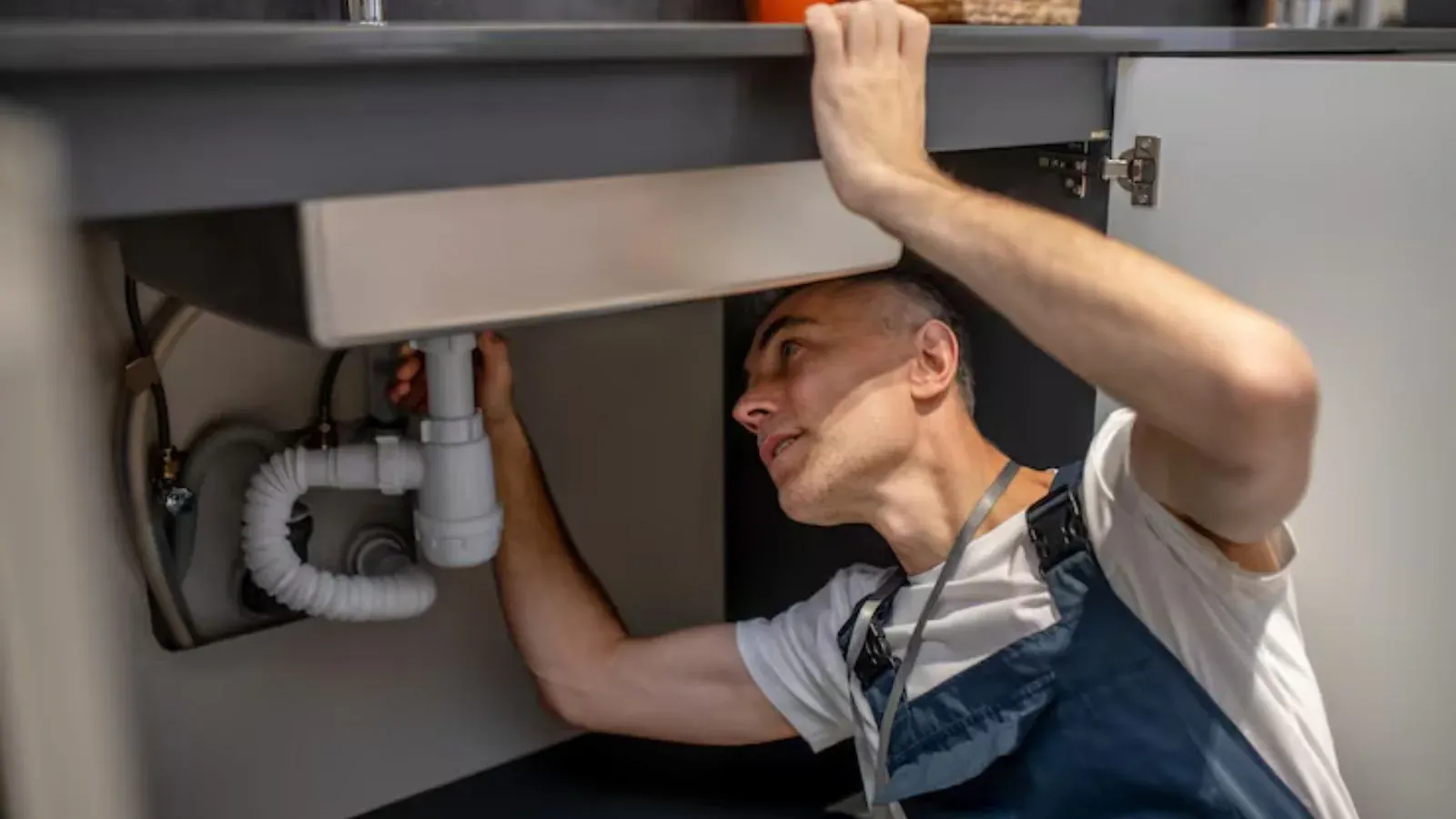
Plumbing a new bathroom sink means connecting two supply lines through shutoff valves, a drain through a P-trap, and a vent that lets that drain breathe. If the new sink replaces an old one in the same spot, the existing stub-outs often work. If it moves to a new wall, a plumber has to rough in new supply, drain, and vent pipes.
In Englewood, NJ, a change of location is the point where permit questions begin. Permit rules vary by job, so ask the Englewood Building & Code Enforcement office before work starts.
Same spot or new spot
The location decides almost everything about cost and difficulty.
| Situation | What it involves | Who should do it |
|---|---|---|
| Replacing a sink in the same spot | New faucet, new trap, reuse existing stops and drain stub | Capable DIYer or plumber |
| Same wall, a few inches over | May need new supply stubs and drain adjustments | Plumber |
| New wall or a different room | New supply lines, drain, and vent through framing | Licensed plumber with permit review |
| Second sink on a double vanity | Extra stops, drain, and vent check | Plumber |
| Adding a sink to a basement bathroom | May need a pump or an ejector for drainage | Plumber |
The more framing, slab, or tile the pipe has to cross, the faster this moves from a project into rough-in work.
Supply stops and the faucet hookup
Each fixture should have its own shutoff valve, called a supply stop, on the hot and cold lines. These let you shut off one sink without losing water to the house. Hot is on the left and cold on the right, as you face the sink.
Short flexible supply lines, usually 3/8 inch, run from each stop to the faucet, and a leaking connection there is a faucet repair job. Tighten the connection by hand and then a quarter turn with a wrench. Too much force cracks nuts and ruins the rubber seal.
Before you set the faucet, flush the lines for a minute with the aerator off. Grit from new work clogs aerators and scratches cartridges. Then open the stops slowly and check every joint with a dry tissue.
The P-trap, the drain arm, and slope
The drain starts at the sink's pop-up assembly and runs through a tailpiece to the P-trap, the U-shaped bend that holds water and blocks sewer gas. From the trap, a horizontal arm leads to the drain stub in the wall. Bathroom sink drains are commonly 1-1/4 or 1-1/2 inch.
The arm should slope gently toward the wall, a rule of thumb of about 1/4 inch per foot. Too steep and water can outrun the solids, too flat and it drains slowly. The stub height varies, and in many homes it sits roughly 18 to 22 inches above the floor, but follow what your framing allows.
Do not use an S-trap, a design that can siphon the water seal out. If your old setup used one, a plumber can replace it with a P-trap and a vent.
Putting a replacement sink in the same location
Shut off and drain
Close the stops, open the old faucet, and put a bucket under the trap.
Remove the old fixture
Disconnect the supply lines and trap, then cut through the old caulk and lift the sink.
Inspect the stubs
Look for corrosion, a leaking stop valve, or a drain stub that is crooked or damaged.
Set the new sink and faucet
Install the faucet on the sink before mounting it, which is easier than reaching under later.
Connect and test
Hook up supply lines, pop-up, and trap, then fill and drain the sink while watching every joint.
Why venting matters at the new sink
Every trap needs a vent so draining water doesn't pull the trap seal out and so the drain flows smoothly. A sink with no vent gurgles and may leak sewer gas into the room. Adding a sink to a new spot means finding the nearest vent or tying into the vent stack.
Some homes allow an air admittance valve in specific cases, but whether it is acceptable depends on local approval. That is a question for the licensed plumber and the building office, not something to guess about.
Look into plumbing installation work if the sink move needs new drain and vent piping inside a wall. The plumber will check what is in the wall before anything is cut.
When to call a plumber instead of doing it yourself
Stop and call if you notice any of these.
- The sink is moving to a different wall
- A shutoff valve will not close or drips when turned
- Pipes are galvanized steel, corroded, or hard to loosen
- The drain stub is damaged or missing
- You find no vent or an unexplained vent connection
- The job requires opening walls, the floor, or tile
What Englewood and Bergen County homeowners should know about adding a sink
The Englewood Building & Code Enforcement office is at 2-10 North Van Brunt Street and is open Monday to Friday, 9:00 a.m. to 5:00 p.m., excluding holidays. Under New Jersey's Uniform Construction Code, the municipality has a plumbing subcode official who reviews permit applications. The city's pages do not spell out plumbing permit rules, so phone with your plan and ask whether your job needs one.
Plumbing work in New Jersey must be done by a master plumber, so a contractor who moves pipes should hold that licence. In Fort Lee, where many high-rise buildings have gone up since the 1960s, condo and co-op rules often add another layer, so ask building management before you schedule anything. In Englewood Cliffs, the same question applies to any work in a rental or a managed property.
Source type: city building dept contact page, NJ Division of Consumer Affairs.
Check a plumber before you hire
New Jersey law says plumbing work must be done by a licensed master plumber. Ask for the licence number, then confirm it with the State Board of Examiners of Master Plumbers, part of the New Jersey Division of Consumer Affairs.
Permit rules vary by job, so ask the Englewood Building & Code Enforcement office before work begins.
Questions homeowners ask
Permit rules vary by job, so ask the Englewood Building & Code Enforcement office. A like-for-like swap in the same location may be treated differently from moving pipes. A short call before you start is the safest way to find out.
Many homes use PVC or ABS for drain lines, but what the building allows depends on local approval and what your existing system uses. Ask the plumber and the building office, and don't mix materials without the right transition fittings.
Common causes are a flat drain arm, a clogged or crimped pop-up assembly, excess plumber's putty in the drain, or a vent problem. Check the trap first. If the sink gurgles, a vent may be the cause.
Often yes. Many buildings require notice or approval for any plumbing change, and some require a licensed plumber with insurance on file. Ask management for the rules in writing before you buy materials.
The rough-in is the supply, drain, and vent piping set inside the wall before the fixture is installed. It is the hidden part of the job and the part most likely to need inspection.
Still not sure what you need? Call the line and describe what you see.
Call (551) 249-3045