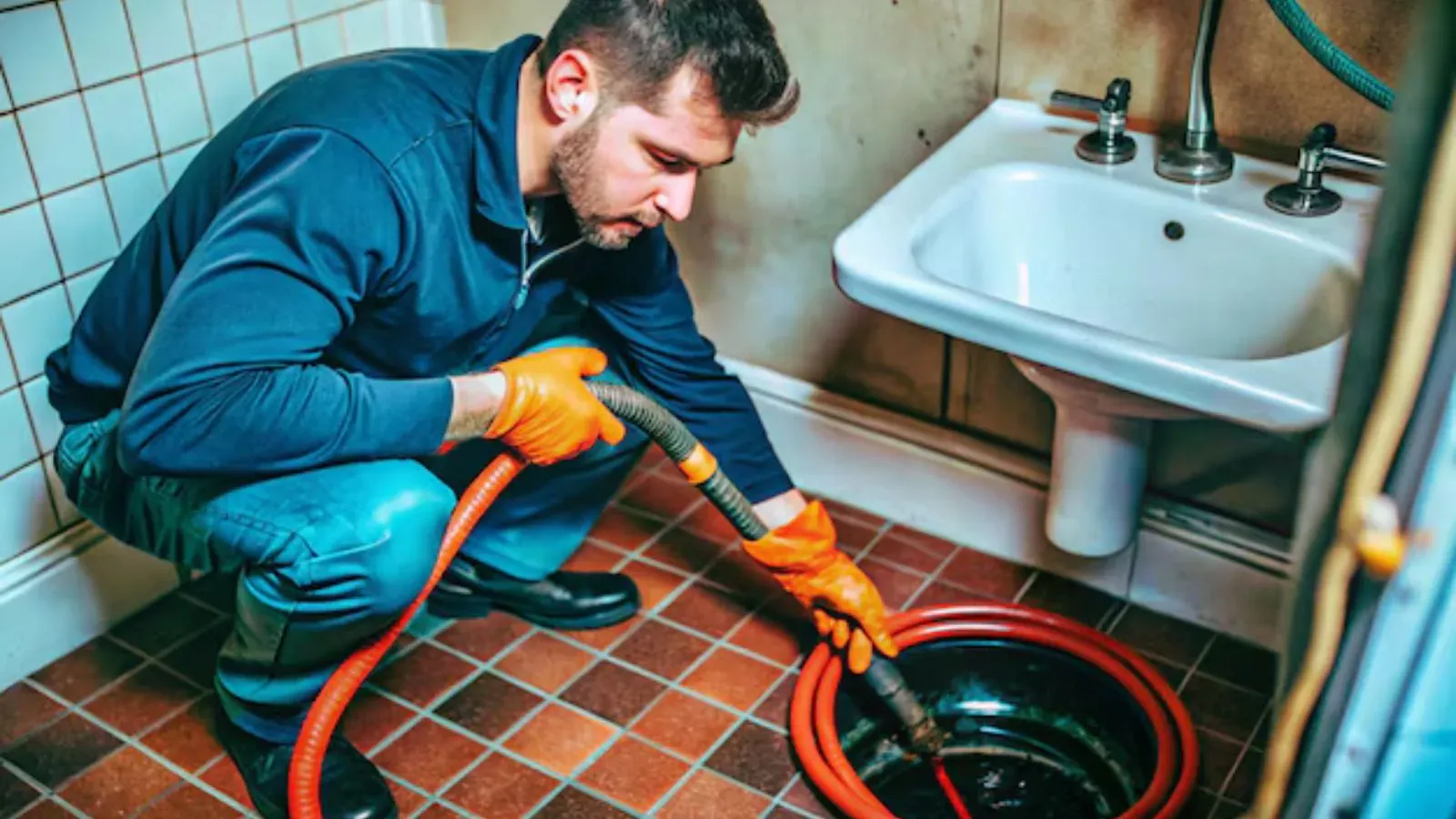
The most common causes of clogged drains are hair and soap scum in bathrooms, grease and food scraps in kitchens, and flushed wipes in toilets. Tree roots, a sagging section of pipe, and a blocked vent cause the harder cases.
The quickest way to sort it out is to count how many fixtures are affected. One slow drain is usually a local clog you can often fix. Several fixtures acting up at once points to the main drain, and that is a job for a licensed plumber in Englewood, NJ.
Match the symptom to the likely cause
Start with what you see and where. This table gives the usual suspect and the usual next step.
| What you notice | Likely cause | Usual next step |
|---|---|---|
| Shower or tub drains slowly, standing water around your ankles | Hair wrapped with soap scum near the drain or in the trap | Pull the stopper, clear by hand, or use a plastic drain tool |
| Kitchen sink slow, then backs up into the other basin | Grease and food scraps coating the line | Snake the trap arm. Call a plumber if it returns fast |
| Toilet clogs often, plunger works only briefly | Wipes, too much paper, or a partial blockage farther down | Plunge properly, then have the line checked if it repeats |
| Gurgling sounds and slow drains in several rooms | Partial main line clog or a blocked vent | Stop using water and call a licensed plumber |
| Basement floor drain bubbles when the washer drains | Main line restriction, often roots or a belly | Camera inspection of the line |
Smell matters too. A sewer odor with slow drains usually means the blockage is past the fixture, not in it.
The everyday culprits at a single fixture
Hair is a leading cause of slow bathroom drains. It does not dissolve, so it catches on the rough spots of the pipe or on the stopper mechanism and then holds soap, toothpaste, and skin oils against it. A strainer in the shower costs a few dollars and prevents most of this.
Soap scum is a quieter cause. Bar soap contains fats that react with minerals in the water and form a pasty film on the pipe wall. The film narrows the opening, and hair and debris then land on it like they would on glue.
In kitchens, grease and food scraps are the standard cause. Fat cools and sticks, coffee grounds settle, and starchy food such as rice and pasta swells in the line. A garbage disposal grinds food finer, but fine particles still settle in the pipe and build on that grease coating.
Wipes and other things that never break down
Wipes labelled flushable still do not break apart the way toilet paper does. They hold their fibres together, snag on rough joints, and gather in a rope that other waste then clings to. This is a leading cause of toilet and main line stoppages.
Feminine products, paper towels, cotton swabs, dental floss, and cat litter belong in the trash for the same reason. Floss is a quiet offender because it wraps around other debris and pulls it into a mass.
A toilet has its own internal trap, and it is narrow. Too much paper at once can plug it, but a proper plunger usually clears that. If a toilet clogs repeatedly and nothing seems to be going in that should not be, the blockage may be downstream of the toilet.
Problems inside the pipe itself
Tree roots are attracted to the moisture and nutrients in a sewer line. They enter through tiny cracks or loose joints, then grow into thick mats that catch paper and waste. Roots are most common in older clay, cast iron, or concrete-type lines, and they return unless the pipe is repaired.
A belly is a low spot where a section of pipe has sagged, often because the soil beneath it shifted. Water and waste pool in the dip instead of flowing through, and solids settle there. A belly usually shows up as a line that clogs again after every cleaning, and a camera will show it.
Pipe can also collapse, corrode, or separate at a joint. Old cast iron flakes inside as it ages, and that rough interior narrows the opening and catches debris. These issues do not clear with a snake, because the problem is the pipe, not what is in it.
Blocked vents: the cause people overlook
Every drain needs air as well as slope. Vent pipes run up through the roof so air can enter behind the draining water. If a vent is blocked by leaves, a bird nest, or ice, the drain can gurgle, drain slowly, or pull water out of a trap and let sewer gas into the room.
A vent problem rarely looks like a normal clog. Look for gurgling from a drain nobody was using, slow drains on several fixtures with no clog found, and sewer odor near a trap that normally holds water. Checking a roof vent means working at height, so leave that to a licensed plumber.
How to tell a fixture clog from a main line clog
Count the affected fixtures
One slow sink points to a local clog. A tub, a toilet, and a sink all acting up point downstream.
Check the lowest drain
A basement floor drain or lowest-floor shower is the first place a main line backup shows.
Run the washing machine
If the basement drain gurgles or rises when the washer empties, the main line is restricted.
Flush a toilet and watch the tub
Bubbling or water rising in the tub after a flush is a classic main line sign.
Locate the cleanout
A capped pipe in the basement or yard gives a plumber direct access. Do not open one with water backing up behind it.
What to try yourself and what to leave alone
A flange plunger, a plastic hair tool, and a cleaned P-trap handle most single-fixture clogs. Put a bucket under the trap, unscrew the slip nuts by hand, and clear it out. These are safe, cheap, and often finish the job in ten minutes.
Skip the liquid drain openers if you can. They sit in a standing clog and can damage some pipe and fixtures, and they are a hazard to whoever opens the line next. Never mix two products, because the combination can release dangerous gas.
When more than one fixture is affected, stop adding water. Call a licensed plumber and ask for drain cleaning with a camera look, so the cause is identified instead of guessed. Homeowners in Leonia and Teaneck face the same sorting problem. If the cause is deep in the line, a plumber can arrange sewer line cleaning from a cleanout.
General cost ballparks
These are wide, rounded industry ballparks for the region, labelled general. They are not a price quote.
| Situation | General ballpark | Why it varies |
|---|---|---|
| Single fixture clog cleared with a hand tool or cable | Roughly $125 to $400 | Access, time of day, how far the clog is |
| Main line clearing from a cleanout | Roughly $200 to $600 | Pipe length, root growth, cleanout access |
| Camera inspection | Roughly $150 to $500 | Length of line and what has to be done to reach it |
Roots and bellies mean repair costs go well beyond these figures, so get a clear price before work starts.
What Leonia's hills and Englewood's older housing mean for your drains
Leonia is a small borough with a surprising range of elevation. The western part sits as low as about 5 feet, the centre is about 115 feet, and the eastern part rises to about 318 feet. Drains run on gravity, so in a hilly area like this the lowest fixture in a house, often a basement floor drain, is usually the first place a main line backup shows.
Englewood is long settled, with passenger rail arriving in 1859, which suggests many older houses in the area. Older sewer laterals may be clay or cast iron, but each house has to be checked individually. A camera inspection is the honest way to learn what your line is made of and whether roots or a belly are the cause.
Source type: Borough of Leonia elevation data, Englewood city history.
Check a plumber before you hire
New Jersey law says plumbing work must be done by a licensed master plumber. Ask for the licence number, then confirm it with the State Board of Examiners of Master Plumbers, part of the New Jersey Division of Consumer Affairs.
Permit rules vary by job, so ask the Englewood Building & Code Enforcement office before work begins.
Questions homeowners ask
A fast repeat usually means the clog was only partly removed or the pipe has a defect. Grease coating, roots, and a belly in the line all cause quick returns. A camera look shows which one you have.
Rarely by itself. Hair mixes with grease and wipes to form a mass, and that mass usually catches at a rough joint or a root intrusion. Main line problems tend to have a structural cause as well as debris.
Often. Gurgling means air is being pulled through water somewhere, which can be a partial blockage or a vent problem. If it happens along with slow drains elsewhere in the house, treat it as a possible main line issue.
No. Roots can often be cut back with a cable or cleared with high-pressure water, then the pipe is inspected. A pipe with a clean cut or a small crack may last a long time, while a badly cracked pipe needs repair.
If both units back up, the blockage is probably in the shared drain line, which is usually the owner's responsibility. If you rent, tell the landlord first, then call a plumber they approve. Ask your landlord or the township's code office if you are not sure who handles it.
Still not sure what you need? Call the line and describe what you see.
Call (551) 249-3045